Friday, September 20, 2019

Devil's Kitchen - Devil's Kitchen (1969 us, remarkable west coast psych blues rock, 2011 Vinyl issue)


Devil's Kitchen Band was a four piece rock and roll band that lived and performed in San Francisco from the Spring of 1968 through the Summer of 1970.  We were the "house band" at Chet Helm's "Family Dog Ballroom on the Great Highway" opening for, and often jamming with, many of the most well known groups of the times.   We performed at all of the major West Coast venues from San Francisco's Fillmore West to L.A.'s Whisky A Go Go.

During the summer of 1970 while in the midst of a Midwest tour, the band fell apart when a series of gigs at colleges and universities was cancelled in response to the Kent State shootings.  Our last  big gig was Labor Day weekend 1970 at the Kickapoo Creek Rock Festival in Hayward, IL.

Everybody wants to know about the name: Devil's Kitchen... No we weren't a devil-worship-motorcycle-gang-heavy-metal-band...  That wasn't what we were called when we formed and for the first year or two we were playing.  We started out as "Om", the Hindu word/concept (click on the symbol to learn more about the meaning)... but when we got to San Francisco there were two or three other bands named that or some variation of spelling (most notably, AUM) playing in the Bay Area.  We had spent a couple months practicing at the lakeside vacation cabin of the family of our good friend and roadie, Rolf Olmsted.  We had fond memories of our time there and named the group after the lake - Devil's Kitchen Lake, an 810-acre lake about 8 miles from Carbondale (home of Southern Illinois University). 

How did the band start?  The full version could be a very long story, but the short version is that Brett, Robbie, Bob, and Steve knew each other from playing in different groups.  Bob had been a driving force as the bassist in a local blues rock band called the Nite Owls (aka the Nickel Bag) and also played multiple instruments in various groups as part of the Folk Arts Society, perhaps most notably, the bluegrass group, the "Dusty Roads Boys".  Steve had been the standout drummer playing with a local psychedelic rock group, "Hearts of Darkness" where he picked up the nickname "Naz".  Robbie had gained notoriety as the exceptionally talented young lead guitarist and band leader in a series of local high school bands, most recently the "Viscounts".  Brett  played in various folk groups and was active singing and palying  in the Folk Arts Society, and was the band leader, vocalist and guitarist for a typical college party band, "Om", whose personnel changed from semester to semester.  One semester, they decided to re-form "Om" with the best players from the best local groups.

... parties, protests and teen clubs... Besides playing the usual campus parties and local teen clubs and campus gigs, we were the "house band" for a new teen club aka rock emporium in nearby Murphysboro called the Hippodrome.    Early song lists were mostly covers of Folk-rock, blues, Brit-rock and classic American rock and roll - "Purple Haze", "Sunshine of Your Love", "Rock Me Baby", "Mr. Fantasy", "I Can See For Miles", "Johnny B. Goode", etc... As we continued to perform, we started adding more and more original songs to our repertoire until we were ready to present sets of mainly original material.

Brett, who was from the Bay Area, had visited San Francisco for the "Summer of Love" the previous summer, worked with the Diggers, found a "Frame of Reference" and now wanted to take the band out there to live and play.  The band practiced intensely for a couple months and then hit the road - everybody and our equipment packed up in Brett's Blue VW bus.  The first time we only got as far as Freeport, IL before burning out the motor.  After getting a new motor, we set out again and drove cross-country to San Francisco...

...practice, practice, practice... When we got to San Francisco, we rented an old auto garage in the Mission District across the street from a pie factory and set up a practice space surrounded by improvised living space.  We played for anyone who would let us perform in front of an audience, getting several gigs in small local venues and doing benefits for the SF Mime troupe, etc.  (see the Photos/Posters for some of our earlier gigs) Eventually we started getting the occasional opening slot in local concert halls.

...sex, drugs, and rock & roll... not necessarily in that order... Yeah, we did the whole rock and roll band life style with all that involves, but it wasn't all just one big party... okay, yeah, it was...

After a while and with a growing coterie of roadies, girlfriends and just friends of the band passing through San Francisco, we needed a better living space and found a roach infested but huge 12-room apartment on the second floor of the building on the NE corner of Haight and Ashbury. Janis Joplin lived around the corner and down the block and we were close to Golden Gate Park and the weekend concerts where we played several times.  After the riots, we moved across the Panhandle to an old rooming house on Fell Street. We got more and more paying gigs all around the Bay Area, auditioned at the Fillmore where Bill Graham took an interest in us and helped us get more gigs and sent us into a studio to learn recording. 

Eventually we hooked up with a new manager, Harvey Morrison, who knew the local music scene well and who moved us to an old rooming house on Fell Street across from the panhandle of Golden Gate Park.  He also introduced us to Chet Helms who was in the process of opening a new venue after the Avalon had been shut down.  We opened the Family Dog Ballroom with the Jefferson Airplane and the Amazing Charlatans, and played there on and off as sort of the "house band" for the next year and a half, frequentyly filling in for bands that canceled at the last minute for one reason or another...

We did one LA tour, playing the Golden Bear, the Brass Ring, the Corral, and the Whiskey a Go Go, where we opened for Savoy Brown.  Mostly though, we played Northern Califorenia and the Bay Area at places like the Matrix, Keystone Korner, the San Francisco Art Institute, Stinson Beach, Berkeley, Santa Cruz, Palo Alto, San Jose, Boulder Creek, Monterrey, etc. while living in the Fell St house.  One of our favorite gigs was a week playing every evening at a Ski Resort, Bear Valley... skiing all day, party all night... 

During the summer of 1970 while in the midst of a Midwest tour, the band fell apart when a series of gigs at colleges and universities was cancelled in response to the Kent State shootings.  We had just played in Cincinnati at the legendary Ludlow Garage again and returned to Carbondale where we were performing at many of the local clubs.  First Steve left and we got an old friend, Randy Bradle, to join us on drums, and  then after our final gig at the Kickapoo Creek Rock Festival, Bob left, heading back to the West Coast with no intention of re-forming the band back in San Francisco. 

For several months, Robbie and Brett continued to play as Devil's Kitchen in and around Carbondale as a trio with Robbie on guitar, Brett on bass and Randy on drums.  We also started jamming with some old friends who had a group called Coal Dust (Carla Peyton and Bob Pina).  Eventually, the two groups merged to become "Coal Kitchen".  Shortly after that, Brett dropped out of the group.  Robbie and Randy stayed with Coal Kitchen for a little while, but eventually Robbie, Randy and Bob Pina broke out to form another band, "Rolls Hardly".  Robbie later returned to the West Coast for a time where he performed with Mickey Hart and Robert Hunter on their solo albums and played bass for a time with the Quicksilver Messenger Service,.. and so it goes
Tracks
1. City - 3:53
2. Farm Bust Blues - 10:51
3. Earthfields - 9:34
4. (You've Got Your) Head On Right - 3:04
5. Dust My Blues (Elmore James, Robert Johnson) - 2:36
6. Cookin' - 3:47
7. Mellow Pot Blues (Buster Bennett) - 5:12
8. Mourning Glory - 4:45
All songs by Brett Champlin, Robbie Stokes, Bob Laughton, Steve Sweigart except where indicated

Devil's Kitchen 
*Brett Champlin - Rhythm Guitar, Bass, Vocals
*Bob Laughton - Bass, Slide Guitar, Vocals
*Robbie Stokes - Lead Guitar, Vocals
*Steve Sweigart - Drums

Free Text
Text Bin

Thursday, September 19, 2019

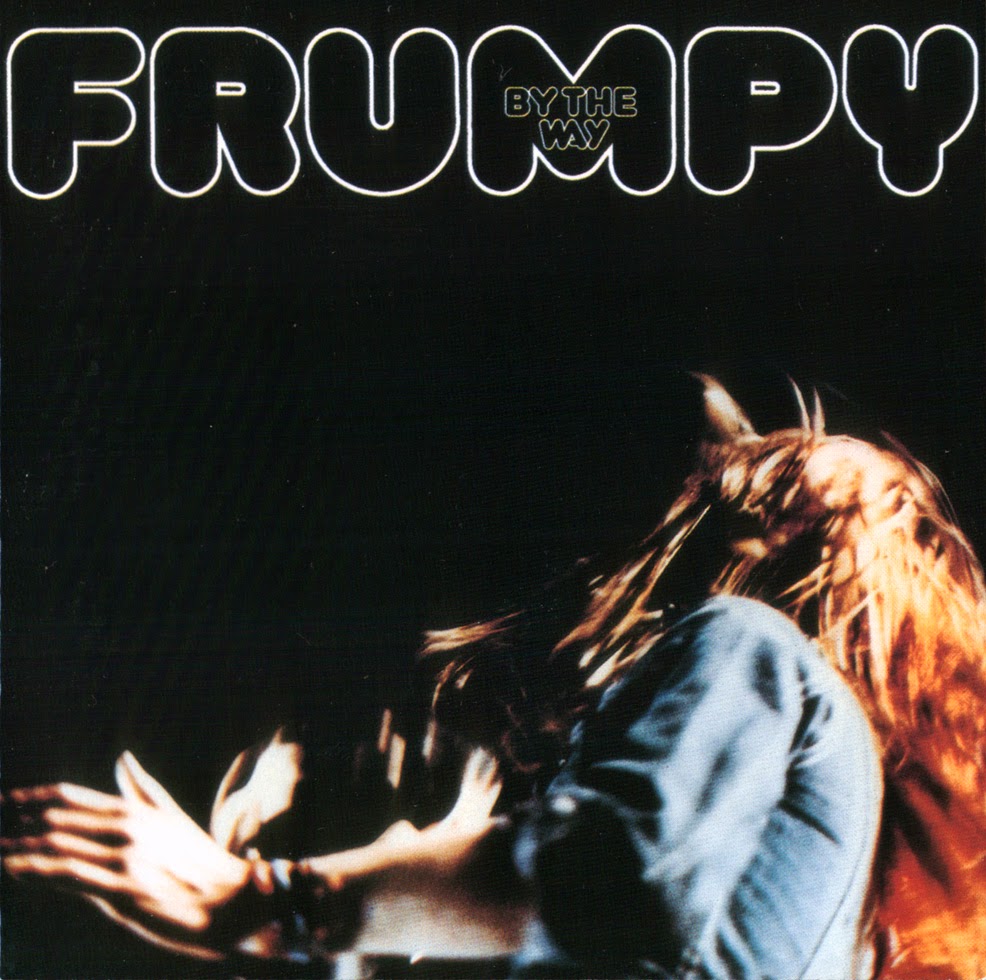
Frumpy - By The Way (1972 germany, excellent heavy bluesy prog rock, Repertoire issue)


Frumpy - By the Way, the title track of their third album, released in 1972. Frumpy evolved out of a gospel/folk outfit called The City Preachers in Hamburg, Germany in early 1970. They were one of the many fantastic bands to emerge from the "Krautrock" scene that was blossoming at the time. 

Frumpy, though, were pretty unique, in that their music encompassed elements of folk, jazz, blues, progressive rock and classical music. Led by the dynamic Inga Rumpf ( vocals, acoustic guitar,songwriter extraordinaire), they also employed the services of Jean Jacques Kravetz, an excellent French keyboard player in the Keith Emerson mould. Bassist Karl-Heinz Schott and drummer Carsten Bohn completed the initial line-up, which was augmented by former Sphinx Tush guitarist Rainer Baumann from their second album, "Frumpy 2", onward. 

Their second album is widely felt to be their best album, with some elaborate and extensive instrumental work, guitar and keyboard duets. with classical and blues undertones. This album, " By the Way", showed that Frumpy could rock with the best. It is, without doubt, one of the best progessive rock albums of all time, and should occupy a space in the collection of any self respecting lover of progressive rock music. 

When Frumpy folded in 1972, Rumpf would go onto form "Atlantis" with Schott and Kravetz, together with drummer Curt Cress and guitarist Frank Diez. Frumpy reformed in the late eighties, and Inga Rumpf has become a successful blues and jazz singer. This lady has incredible talent and her songwriting ability always was one of her major strengths.
Tracks
1. Goin' To The Country (Inga Rumpf) - 3:40
2. By The Way (Carsten Bohn, Inga Rumpf) - 8:51
3. Singing Songs (Inga Rumpf, Rainer Baumann) - 7:02
4. I'm Afraid Big Moon (Carsten Bohn, Inga Rumpf, Jean-Jacques Kravetz) - 6:25
5. Release (Carsten Bohn, Inga Rumpf) - 8:50
6. Keep On Going (Inga Rumpf) - 5:25

Frumpy
*Inga Rumpf - Vocals, Guitar
*Jean-Jacques Kravetz - Keyboards
*Karl Heinz Schott - Bass
*Carsten Bohn - Drums

1970  Frumpy - All Will Be Changed (2008 remaster with extra tracks)
1971  Frumpy - Frumpy II
Related Act
1972 Atlantis - Atlantis
1975  Atlantis - Live In The Fabrik (2008 remaster and expanded)

Free Text
Just Paste

Monday, September 16, 2019

Fleetwood Mac - Bare Trees (1972 uk / us, wonderful adult rock, 2013 SHM remaster)


In 1972, Fleetwood Mac's ‘Bare Trees’ was a marked improvement after the releases of "Kiln House" and "Future Games". In fact, several decades later, it still sounds decent.

With Danny Kirwan’s ‘Child Of Mine’ the album starts with best foot forward. Its uplifting mixture of California pop and guitar boogie is easily compared to Delaney & Bonnie, although with a tougher edge. As expected, McVie lays down a solid bassline, never flashy, and Kirwan and Welch indulge in top notch almost Allman Brothers style guitar interplay. Christine McVie’s organ work bubbles just under the surface. You have to ask why the band sounds so vibrant here, when on the preceding album exactly the same line-up sounded lost and tired? Maybe on ‘Future Games’ they’d not found their footing together…

Christine McVie takes the helm for ‘Homeward Bound’, a piano-led pop rock workout with punchy edges. It’s not quite got the finesse of her later songwriting, but here she proves that she’s more than a valuable addition to the band. Bob Welch turns in a great guitar solo, which at the end becomes twin lead with the addition of Kirwan. ‘Spare Me a Little of Your Love’ points further in the direction Christine’s writing would later take the band, with its almost perfect arrangement and plain emotion. ‘Sunny Side of Heaven’ is a gorgeous instrumental piece, with all members putting in top performances – particularly of note is Kirwan’s understated lead work. It would have been so easy for him to overstep the mark and play something flash, but he opts for lyrical soloing, creating a beautiful end result.

‘Bare Trees’ also features less immediate material. ‘Danny’s Chant’ features Kirwan in aggressive mode. At the beginning, he plays a spiky guitar riff through a wah-wah pedal leading into a groove with heavy accompaniment from the rhythm section. With hindsight, I wonder if he’d already begun to feel out of place in the band, with Welch’s material becoming stronger. ‘Dust’ features some nice vocal harmonies, but ultimately, the end result is slight.

‘The Ghost’ is softer, with its slightly jazzy tendencies. A strong chorus shows the potential behind Welch’s songwriting in a way that little of ‘Future Games’ ever did. I often hear an influence from Stephen Stills in Welch’s best work with Fleetwood and this is no exception. His other key number here, ‘Sentimental Lady’ (later re-recorded for his ‘French Kiss’ solo record), is little more than easy listening singer songwriter fare. The title cut offers mid-paced pop that’s fine, but now sounds like the most dated thing the album has to offer. Again, there’s some decent interplay between Welch and Kirwan, so at least it’s got that going for it.

The album closes with a home recording of an old lady reading her own poetry. Apparently Mrs. Scarrott lived near the band’s communal home. I’m not sure why they chose to include it – maybe it was just in keeping with the hippie spirit of the times…or maybe she kept making them jam.

Like most of the albums Fleetwood Mac recorded during the first half of the 70s, ‘Bare Trees’ could never be called classic in the traditional sense, but has more than enough to recommend it.
Tracks
1. Child Of Mine (Danny Kirwan) - 5:26
2. The Ghost (Bob Welch) - 4:02
3. Homeward Bound (Christine McVie) - 3:22
4. Sunny Side Of Heaven (Danny Kirwan) - 3:12
5. Bare Trees (Danny Kirwan) - 5:03
6. Sentimental Lady (Bob Welch) - 4:34
7. Danny's Chant (Danny Kirwan) - 3:20
8. Spare Me A Little Of Your Love (Christine McVie) - 3:46
9. Dust (Danny Kirwan) - 2:42
10.Thoughts On A Grey Day (Mrs. Scarrott) - 1:46

Fleetwood Mac
*Danny Kirwan - Guitar, Vocals
*Bob Welch - Guitar, Vocals
*Christine McVie - Keyboards, Vocals
*John McVie - Bass Guitar
*Mick Fleetwood - Drums, Percussion

1967-71  Live At The BBC
1968-70  Show Biz Blues
1968-70  Fleetwood Mac - The Vaudeville Years (two disc set)
1968-71  The Best Of Peter Green's Fleetwood Mac
1969  Shrine '69
1969  Then Play On  (Deluxe Expanded 2013 edition) 
1970  Fleetwood Mac - Kiln House (2013 SHM remaster) 

Free Text
Text Host

Sunday, September 15, 2019

High Tide - Sea Shanties (1969 uk, stunning heavy fuzz psych prog space rock, 2006 remaster and expanded)


What would The Doors have sounded like had they included lead violin and fuzzed out guitars with their organ driven brand of psychedelic rock and roll? Perhaps something like High Tide, a very interesting band from the late 60's/early 70's UK proto-prog scene. The band was part of the Clearwater Management stable of bands that also included Hawkwind, Skin Alley, and Cochise, and their debut album Sea Shanties was on the Liberty/United Artists label. Made up of Tony Hill (guitar/vocals/keyboards), Simon House (violin/keyboards), Peter Pavli (bass) and Roger Hadden (drums), these four musicians mustered together some powerful sounds here on their debut, complete with plenty of bone crunching and doomy guitar riffs, wah-wah solos, soaring violin flights, raging organ, pounding drums, and a Jim Morrison-influenced vocal attack. Much of the music is pretty heavy for the time, with lots of wild and intricate jamming going on between the guitar and violin, which can certainly be heard to full effect on the mind-blowing frenzy of the instrumental "Death Warmed Up", a real scorcher featuring savage, distorted guitar and violin solos. 

Their classic "Futilist's Lament" is a real driving hard rock/early prog number, with catchy riffs, swirling organ, melodic violin, and passionate vocals. "Pushed, But Not Forgotten" sounds like a strange marriage of The Doors and Led Zeppelin, with creepy organ, powerful vocals, and plenty of Jimmy Page styled wah-wah guitar flourishes ("Dazed and Confused" anyone?), not to mention some whispy violin. After the bruising hard rock of "Walking Down the Outlook", which also features a killer violin solo from House, the band launches into the unique sounding "Missing Out", a near 10-minute mix of doom and jazzy hoedown themes. You want scorching guitar riffs, sizzling violin, and haunting vocals-well, this one has it all.

The regular part of the album ends with the rocking "Nowhere", a song with dizzying guitar & violin interplay, but the intense fuzz guitar sound that Hill gets on this one is what is so attractive about this proggy track. The bonus material presented here is pretty neat, mostly demo and unusued studio recordings worked on before the finished album. Of these, the extended jams of "The Great Universal Protection Racket", the crunchy rocker "Dilemma", and the driving mix of prog and heavy rock of "Time Gauges" perfectly complement the album.

High Tide only recorded one more album after this one, and by 1971 had ceased to exist. Simon House joined Third Ear Band and then Hawkwind, before joining up with David Bowie for a few years, while drummer Peter Pavli collaborated with sci-fi author Michael Moorcock in his band Deep Fix as well as working with Hawkwind's Robert Calvert. Tony Hill resurrected High Tide briefly in the early 90's, but today keeps most of attention centered on his own band Tony Hill's Fiction. For the most part, the music of High Tide was buried deep in the vaults until now, but thanks to Eclectic Discs these raw & powerful recordings can be enjoyed by lovers of the early 70's proto-prog and hard rock scene. 
by Pete Pardo
Tracks
1. Futilist's Lament - 5:17
2. Death Warmed Up - 9:08
3. Pushed, But Not Forgotten - 4:43
4. Walking Down Their Outlook - 4:58
5. Missing Out - 9:38
6. Nowhere (Roger Hadden, Simon House) - 5:54
7. The Great Universal Protection Racket - 11:24
8. Dilemma - 5:14
9. Death Warmed Up (Demo) - 7:35
10.Pushed, But Not Forgotten (Demo) - 4:01
11.Time Gauges - 6:24
All tracks by Tony Hill except where stated

High Tide
*Roger Hadden - Drums
*Tony Hill - Guitar, Acoustic Guitar, Vocals
*Simon House - Violin, Organ
*Peter Pavli - Bass

1970  High Tide - High Tide (2010 bonus tracks edition) 
1970  High Tide - Precious Cargo
Related Act
1965-66  The Misunderstood - Before The Dream Faded

Just Paste

Saturday, September 14, 2019

The Ant Trip Ceremony - 24 Hours (1968 us, fantastic psych rock, 40th anniversary 2008 edition)


How did such a wonderfully strange name such as Ant Trip Ceremony come  about?  The band's name came from Steve DeTray.  He entered Oberlin College in Ohio in 1964 but took a hiatus from college in 1966 and part of 1967.  He went to stay with his brother in Logan, Utah.  There Steve  formed a band and needed a name.  By chance he mentioned it to an  English professor at the nearby University in early 1967.

The professor suggested a phrase, "ant trip ceremony",  from an American novel  whose  title Steve can't recall. The author described modern   societal life as an ant trip ceremony.  Steve thought it spoke to the alienation felt by many of the younger generation in 1967, and the name stuck.  So in essence there were two different groups with the name Ant Trip  Ceremony.  The first one Steve formed in Utah in early 1967 and then the second one which he formed at Oberlin in the fall of 1967.

Steve left Utah in the summer of 1967 and headed back for a tour of  duty at Oberlin College.  The band he had in Utah had broken up and  Steve wanted to put together another band at Oberlin. Steve put out the word that he wanted to form an electric rock and roll band.  Gary Rosen was playing in a blues band with George Galt and Mark Stein. Stein, a multi-talented instrumentalist, was a flute major at the Oberlin Conservatory.  Roger Goodman was a brilliant keyboard player,  but refused to play it while in Ant Trip Ceremony and only wanted to sing. All the members for the new band were from Oberlin with the exception of  Jeff Williams who was a local sixteen year old up and coming jazz musician.

The Ant Trip Ceremony album was recorded during two sessions. the first session was in  February of 1968  in a rented hall at Oberlin.  Steve  was there for the first sessions but had left Oberlin by the spring of 1968 and was not present for the second recording session. The album was called "Twenty Four Hours"because that was the feeling behind the sessions(ie.that it took what seemed like twenty four hours to record). The machinery used for the recordings was primitive.

 The band used a KLH tape deck for playback and a two track Roberts reel to reel for recording.  When they wanted to  multitrack they would record on one side of the tape and then record  on the other side as well. Then they would  mix it down to the KLH. The reason the album sounds somewhat  imbalanced  is  because the KLH had one faulty speaker and thus the speaker balance leaned  heavily to the left. This ended up affecting the final mix-down.

How were the songs chosen for the album?  The band  felt ready to record their original songs.  These were performed live before student  audiences. During live shows, the band was wild, but  sadly no live tapes exist.  Thus the original songs done on the album when performed live were more psychedelic and improvised.  Where did the band play live?  Mostly at Oberlin and at off campus parties.  The band was known for getting into strange and long jams.  Furthermore no song was ever done twice exactly the same.

They were, in some ways like the Grateful Dead of the region. When the band played it was a happening, a genuine psychedelic event.  Shows went on for hours, with the audience in a wide variety of states of consciousness. Three hundred copies of the album were pressed and one hundred were sold  for $3.00 each!!  The album's expenses was shared equally by the band members. The artwork and production was done at Oberlin for free. Why was the album done? Steve was leaving Oberlin, and the band wanted to capture some of the magic they had collectively created anything could happen in those days, that there were no limits.

The producer of the album was David Crosby, an Oberlin student and good friend of the band who was very much into music production and sounds.  Sadly, he passed away during the making of this reissue and will be missed greatly.  The artwork for the album was of its time with  psychedelicmindzapping art work.  It was without a doubt a counterculture statement!!          

What are the songs about?  "Elaborations"a great  example of Steve's development of the Indian Raga form, with his guitar tuned to get a sitar sound. He had also been to Berkeley in the summer of 1967 and was  wowed by bands such as The Grateful Dead, Jefferson Airplane, and  Quicksilver.  " Pale Shades Of Gray".words were written by Steve's  first wife, with some Procol Harum  influence, is about the pain of alienation. "River Dawn" George wrote this song about    escaping the restrictions of campus life by sitting on the banks of the Ohio River when the sun was coming up. "Locomotive Lamp"- Gary’s first song as a singer-songwriter.

It was a forerunner to the Grateful Dead’s train/drug imagery. “Little Baby” a blues cover song that was done by Gary and George's blues band before Ant Trip Ceremony.  “ Violets Of Dawn” the band members were fans of Eric Anderson and covered the song, that was also done by the great Northwest group, The Daily Flash. “ Hey Joe” the band loved Jimi Hendrix (of course) and did this cover version in his honor. “Four In The Morning” a weird but strangely ethereal song that bears a striking similarity to “Hey Joe” with its despondency and desperateness.

 “Outskirts- A song about alienation, has words by Oberlin poet, Sandy Lyne and music by pianist, Neal Evans. “What the matter now” written by George's friend , Jack Lee.  Lee used to play with Mother Earth. George got the tune from Jeff and added  different words to it.  “Get Out Of My Life Woman”-a then popular cover song that west coast bands such as “The Doors” were performing.

“What’s The Matter Now”-a lovely psychedelic number that predates the background vocal effect John and Yoko were doing in 1969 and 1970. “Sometimes I Wonder”- no available comments on this blues flavored melody.
Tracks
1. Locomotive Lamp (Gary Rosen) - 3:50
2. What's The Matter Now (George Galt, Jack Lee) - 2:45
3. Violets Of Dawn (Eric Anderson) - 4:34
4. Riverdawn (George Galt) - 3:38
5. Hey Joe (Billy Roberts) - 4:20
6. Outskirts (Sandy Lyne, Neal Evans) - 1:39
7. Little Baby (Willie Dixon) - 3:03
8. Get Out Of My Life (Alain Toussaint) - 3:05
9. Four In The Morning (George C. Remaille) - 4:30
10.Sometimes I Wonder (Major Lance) - 3:53
11.Pale Shades Of Gray (Steve Detray, Jo Detray, Roger Goodman) - 4:30
12.Elaborations (Steve DeTray) - 7:20

The Ant Trip Ceremony
*Steve DeTray - Guitar
*George Galt - Bass, Harmonica, Harp, Rhythm, Vocals
*Gary Rosen - Bass, Rhythm, Vocals
*Mark Stein - Bass, Flute, Guitar
*Jeff Williams - Drums

Just Paste

Wednesday, September 11, 2019

Stepson - Stepson (1974 us, solid rough bluesy rock, 2010 remaster)


Portland's Stepson were a sweatdrenched bluesy hard rock act that rose from the ashes of defunct area band, Touch. Their sole album was released on ABC/Dunhill Records in 1974, though the band were essentially a studio creation. Despite the fact that the band never toured in support of this amazing album, over the years the word has gotten out about this incredible album and the band enjoys cult success among collectors and obscurity geeks.

Though the album doesn't reinvent the wheel, it is a fine example of Detroit style hard rock with a healthy dose of punk attitude. Easily one of the best example of "cock rock" to come along at such an early stage of the genre's existence, Stepson deserve recognition for their meager contribution to rock music. After the band's efforts to record a followup were snuffed out, several members went on to later work for Elektra Records. Others went on to do session work for notably fluffier artists like Carole King, James Taylor and Shaun Cassidy.
Tracks
1. Rule In The Book (Len Fagan, Bruce Hauser, Jeffrey Hawks, Joey Newman) - 3:21
2. Lil' Bit (Len Fagan) - 4:04
3. Rude Attitude (Carl D'Errico, Roger Atkins) - 3:26
4. It's My Life (Gerry Goffin, Carole King) - 3:04
5. I Apologize (Len Fagan, Bruce Hauser, Jeffrey Hawks, Joey Newman) - 5:38
6. Suffer (Jeffrey Hawks, Joey Newman) - 4:43
7. Back To 'Bama (Len Fagan, Bruce Hauser, Jeffrey Hawks, Joey Newman) - 2:35
8. Man, I'm A Fool (Jeffrey Hawks, Joey Newman, Bruce Hauser) - 4:31
9. Turnpike (Bruce Hauser, Goldsmith) - 2:42
10.Burnin' Hurt (Len Fagan, Bruce Hauser, Jeffrey Hawks, Joey Newman) - 4:38

Stepson
*Len Fagan - Drums
*Bruce Hauser - Bass
*Jeffrey Hawks - Vocals
*Vern Kjellberg (aka Joey Newman) - Guitar
With
*Jeff Simmons - Harp
*Jimmy Greenspoon - Organ

Related Acts
1968-73  Touch - Touch (2012 remaster and expanded)
1970  Blue Mountain Eagle - Blue Mountain Eagle (2012 remaster and expanded) 

Free Text
Text Host

Saturday, September 7, 2019

Creedence Clearwater Revival - Live At Woodstock (1969 us, amazing classic rock with country shades, 2019 digipak remaster)


Creedence Clearwater Revival's entire performance at Woodstock finally released 50 years after the band played at the legendary music festival.

Live at Woodstock includes all 11 songs from CCR's set on Aug. 16, 1969. In addition to band classics like "Green River" and "Proud Mary," the album includes covers of Wilson Pickett's "Ninety-Nine and a Half (Won’t Do)" and Screamin' Jay Hawkins' "I Put a Spell on You."

Creedence were scheduled to perform on Saturday night of the festival, following the Grateful Dead's set. But Woodstock almost immediately lost any hope of following a schedule, so they were pushed back. The Dead's longer-than-expected show sent CCR's appearance back even further, and they didn't end up onstage until after midnight.

They refused to allow their set to appear in the hit 1970 movie or the No. 1 soundtrack. Three songs eventually appeared on 2009's Woodstock 40 Years On: Back to Yasgur's Farm box set: "Green River," "Bad Moon Rising" and "I Put a Spell on You." The upcoming album marks the first time their historic show has been released in full.

Creedence Clearwater Revival had just released the second of the three albums they put out in 1969. Their second LP, Bayou Country, was released in January. Green River came out just a few weeks before their Woodstock performance. Willy and the Poor Boys followed in November.
by Michael Gallucci, June 11, 2019
Tracks
1. Born On The Bayou - 5:34
2. Green River - 3:16
3. Ninety Nine And A Half (Won’t Do) (Steve Cropper, Eddie Floyd, Wilson Pickett) - 4:46
4. Bootleg - 3:38
5. Commotion - 2:48
6. Bad Moon Rising - 2:13
7. Proud Mary - 3:52
8. I Put A Spell On You (Jay Hawkins And Herb Slotkin) - 4:28
9. The Night Time Is The Right Time (Lew Herman) - 3:30
10.Keep On Chooglin’ - 10:29
11.Suzie Q (Eleanor Broadwater, Robert Chaisson, Dale Hawkins, And Stan Lewis) - 10:52
All songs by John Fogerty except where stated

Creedence Clearwater Revival
*John Fogerty – Vocals, Guitar, Harmonica, Piano
*Doug Clifford – Drums
*Tom Fogerty – Guitar, Vocals
*Stu Cook – Bass Guitar

Free Text
Just Paste

Tuesday, September 3, 2019

Beggars Opera - Nimbus The Vertigo Years Anthology (1970-73 uk, remarkable heavy prog rock, 2012 double disc remaster)


This splendid anthology from the classically-infused progressive rock band from Glasgow that initially coalesced in 1969, includes everything from their first three releases – 'Act One', 'Waters Of Change' and 'Pathfinder' as well as two early non-album tracks, plus four from their fourth album 'Get Your Dog Off Me'. Beggars Opera have gone on to release (I think) a further eleven studio albums, most of these following the reactivation of the band by the husband and wife pairing Ricky Gardiner and Virginia Scott along with their drummer son Tom Gardiner: the most recent being last year's 'Mrs Caligari's Lighter'.

But I'm jumping ahead! This very welcome anthology documents something of a Reggie Perrin type scenario, with a band reaching their pinnacle but then losing some of their sheen as personnel changes cause a lack of creative focus. All five of the tracks on the debut album are included and show a band already very much into their creative stride, with Alan Park's signature organ sound redolent of The Nice and – especially in the epic pairing 'Raymond's Road' and 'Light Cavalry' – extensive musical quotes from classical sources including Mozart, Greig and Bach on the former, while the latter is adapted from a piece by Austrian composer Suppé. You'll recognise it!!

'Waters...' is quite different as Mellotron-player Virginia Scott turned the band into a sextet! This time all nine songs were written by the band, and focused on dual organ/mellotron keyboardery to produce wonderful symphonic landscapes. The song writing was also top drawer, and melodic rock has rarely sounded better than on tracks such as 'I've No Idea', 'Festival' and the utterly pomptastic pair of 'Time Machine' and 'Silver Peacock'.

'Pathfinder' still finds the band mainly on top of its game, although Virginia Scott does not feature other than on a couple of co-writing credits (Park seemingly having mastered the Mellotron!) It's perhaps their most cohesive offering even though the highlight ('Macarthur Park') is not an original composition and it also takes a further step away from the symphonic focus of the first two albums. In many ways, however, it is more progressive and the wonderful instrumental 'From Shark To Haggis' introduces bagpipes to the instrumentation used by the band!

By the time 'Get Your Dog Off Me' appeared, drummer Raymond Wilson had gone but more importantly vocalist Martin Griffiths had departed. Ex-Writing On The Wall front man Linnie Paterson was then in place, and his stylings were very different from those of Griffiths. The band's focus on this album had become rather disjointed and fuzzy as will be judged from the four tracks included here. None of these are poor, and indeed keyboardist Alan Park's arrangement of 'Classical Gas', the hit instrumental for Mason Williams in 1970 is particularly inspired.

This anthology is due testament to a band that whilst failing to achieve any sort of commercial consistency, managed to bequeath some remarkable and even inspirational music across the albums documented here.
by Paul Jerome Smith
Tracks
Disc 1
From The Album "Act One" 1970
1. Poet And Peasant (Franz von Suppé, Arranged By Beggars Opera) - 7:13
2. Passacaglia (Marshall Erskine, Virginia Scott) - 7:07
3. Memory (Marshall Erskine, Virginia Scott) - 3:59
4. Raymond's Road (Martin Griffiths, Marshall Erskine, Ricky Gardiner, Alan Park, Raymond Wilson) - 11:56
5. Light Cavalry (Franz von Suppé, Arranged By Beggars Opera) - 11:56
Single 1971
6. Sarabande (Martin Griffiths, Marshall Erskine, Ricky Gardiner, Alan Park, Raymond Wilson) - 3:33 
7. Think (Alan Park, Martin Griffiths) - 4:27
From The Album "Waters Of Change" 1971
8. Time Machine (Alan Park, Martin Griffiths, Ricky Gardiner) - 8:09
9. Lament (Alan Park, Raymond Wilson) - 1:51
10.I've No Idea (Alan Park, Martin Griffiths) - 7:43
11.Nimbus (Gordon Sellar, Martin Griffiths, Ricky Gardiner) - 3:35
Disc 2
From The Album "Waters Of Change" 1971
1. Festival (Alan Park, Marshall Erskine, Martin Griffiths) - 5:58
2. Silver Peacock Introduction (Alan Park, Martin Griffiths, Virginia Scott) - 0:23 
3. Silver Peacock (Alan Park, Martin Griffiths, Virginia Scott) - 6:32
4. Impromptu (Ricky Gardiner, Virginia Scott) - 1:18
5. The Fox (Martin Griffiths, Ricky Gardiner, Virginia Scott) - 6:47
From The Album "Pathfinder" 1972 
6. Hobo (Alan Park) - 4:26
7. MacArthur Park (Jimmy Webb) - 8:20
8. The Witch (Ricky Gardiner, Virginia Scott) - 6:03
9. Pathfinder (Ricky Gardiner) - 3:46
10.From Shark To Haggis (Ricky Gardiner, Virginia Scott) - 6:43
11.Stretcher (Ricky Gardiner) - 4:52
12.Madame Doubtfire (Alexander McFreddries, Martin Griffiths, Ricky Gardiner) - 4:20
From The Album "Get Your Dog Off Me" 1973
13.Turn Your Money Green (Alan Park, Barry Ainsworth) - 4:09
14.Working Man (Barry Ainsworth, Gordon Sellar) - 4:33
15.Requiem (Ricky Gardiner) - 2:17
16.Classical Gas (Mason Williams) - 4:34
 
Beggars Opera 
*Martin Griffiths - Vocals
*Alan Park - Organ
*Raymond Wilson - Drums
*Ricky Gardiner - Lead Guitar
*Marshal Erksine - Bass Guitar (Disc 1 Tracks 1-7)
*Virginia Scott - Mellotron, Vocals (Disc 1 Tracks 8-5 Disc 2)
*Gordon Sellar - Bass, Acoustic Guitar, Vocals (Disc 1 Tracks 8-16 Disc 2)
*Colin Fairlie - Drums, Percussion, Vocals (Disc 2 Tracks 13-16)
*Linnie Paterson - Lead Vocals (Disc 2 Tracks 13-16)

1971  Beggars Opera - Waters Of Change (2006 Repertoire digi pack edition) 

Free Text
Just Paste

Monday, August 26, 2019

Aunt Mary - Loaded (1972 norway, stunning organ drivin' heavy rock, 2002 remaster and expanded)


In the summer of ’71 Deep Purple played in Odense, Denmark. And as usual when big names visited the town, Aunt Mary was asked to support. The band performed so well that they were called back for encores. That was not very popular with Deep Purple. It didn’t help much that the audience went ballistic as Aunt Mary started playing Led Zeppelin’s Whole Lotta Love. 

Rumours had it that Aunt Mary played in circles around Deep Purple that night. In a later interview, Ritchie Blackmore allegedly should have referred to Bjørn Kristiansen: «A Norwegian guitar player in Denmark. He is one of the few good guitarists I have met. And if anyone should take over the throne (as guitar king), it should be him.» Neither Bjørn nor the other aunts can confirm the truth of this, as they haven never seen the interview.

That same summer Aunt Mary toured with Jethro Tull for three days. The tour opened in Copenhagen, where Ketil Stensvik played a drum solo so popular with the audience that the band were forbidden to play encores. The summer continued with two concerts with Rory Gallagher, one with Ten Years After and two with Muddy Waters.

Johnny Reimar approached the band with an idea: What if the band made a rock version of Marvin Gayes’ "Abraham, Martin and John" and replaced the names with the recently departed Jimi Hendrix, Janis Joplin and Brian Jones? The single became a huge hit, but was refused airtime in Britain by BBC on account of the song characters’ association to drugs. Regardless of the single’s success, the band never saw any money from it.

On May 1972, a new single was recorded in Norway: "Rosalind". On the B-side was the band’s version of Edvard Grieg’s "In the Hall of the Mountain King". This turned out to be the end of this line-up. Organ player and lead vocalist Jan Groth was an active Christian and had found the music and the lifestyle increasingly difficult to combine with his belief. Thus, he decided to leave the band to pursue a solo career as a Christian artist in Denmark.

With Jan leaving, the band no longer saw the need to stay in Denmark, and relocated to their home town Fredrikstad, Norway. They found a brilliant keyboard player, Bengt Jenssen, almost in the neighborhood, and decided that Bjørn should be the bands new lead singer. September 1972 New album "Loaded" produced by Johnny Sareussen in the famous Rosenborg Studio in Oslo, Norway, "Loaded" showed a much heavier version of the band.  It performed very well for an album in that genre and became a huge hit among the fans.
Tracks
1. Playthings Of The Wind (Bjoern Christiansen) - 2:59
2. Joinin' The Crowd (Bjoern Christiansen, Svein Gundersen) - 3:43 
3. Delight (Bjoern Christiansen, Kjetil Stensvik, Svein Gundersen) - 2:50 
4. Upside Down (Bjoern Christiansen, Svein Gundersen) - 4:15
5. Farewell My Friend Pt. 1 (Bjoern Christiansen, Svein Gundersen) - 2:25 
6. Farewell My Friend Pt. 2 (Bengt Jenssen, Kjetil Stensvik, Svein Gundersen) - 1:00 
7. Blowin' Tiffany (Bengt Jenssen, Bjoern Christiansen, Svein Gundersen) - 7:32 
8. Fire Of My Lifetime (Svein Gundersen) - 5:17 
9. G Flat Road (Bjoern Christiansen, Svein Gundersen) - 5:44
10.In The Hall Of Mountain King (Svein Gundersen, Kjetil Stensvik, Bjoern Christiansen, Jan Groth) - 4:35 
11.Stop Your Wishful Thinking (Svein Gundersen, Kjetil Stensvik, Bjoern Christiansen, Jan Groth) - 3:49 
12.Rosalind (Jan Groth) - 2:50 
13. Jimi, Janis And Brian (Abraham, Martin And John) (Dick Holler) - 4:25
Bonus Tracks 10-13

Aunt Mary
*Bjoern Christiansen - Guitar, Vocal
*Per Ivar Fure - Flute, Harmonica, Saxophone, Mouth Organ, Vocal
*Bengt Jenssen - Keyboards (Tracks 1-10)
*Svein Gundersen - Bass, Piano, Vocal
*Kjetil Stensvik - Drums, Vocal
*Jan Groth - Vocals, Keyboards (Tracks 10-13)

1970  Aunt Mary - Aunt Mary 

Free Text
Just Paste