Parish Hall was a power trio from the California Bay Area. The band consisted of Gary Wagner (guitar, piano, vocals), John Haden (bass), and Steve Adams (drums). Specializing in a hard rock/blues rock sound, their album was originally released near the end of 1970 on a small local California record label. Reminiscent of the sound of another popular trio of the day, the Jimi Hendrix Experience, Parish Hall had begun to gain the recognition of some European collectors by the late 1990s, and originals have fetched high prices in collector's markets. All songs on this album are originals written by Wagner and hold up well when compared to other hard rock acts.
by Keith Pettipas
This superb San Franciscan power trio only recorded one album, which stands as one of the best of its kind. Rooted in blues, its snappy, self-penned songs display a clear acid rock influence, whilst avoiding excess of any sort. Though it was released in Europe and even Australia in 1970, it sank without trace, spelling the end for the band, though their reputation has been growing ever since.
Excellent sophomore album by this San Francisco band, Roy Halee took over the production at the newly created Columbia Records studios in San Francisco. Impressed with the technique of the boys, Roy (who had worked with Simon and Garfunkel, Byrds, Moby Grape and Blood, Sweat & Tears , among others) had no doubts about inviting them to record. The result is this formidable selftitled record, released in 1971 on the Epic label.
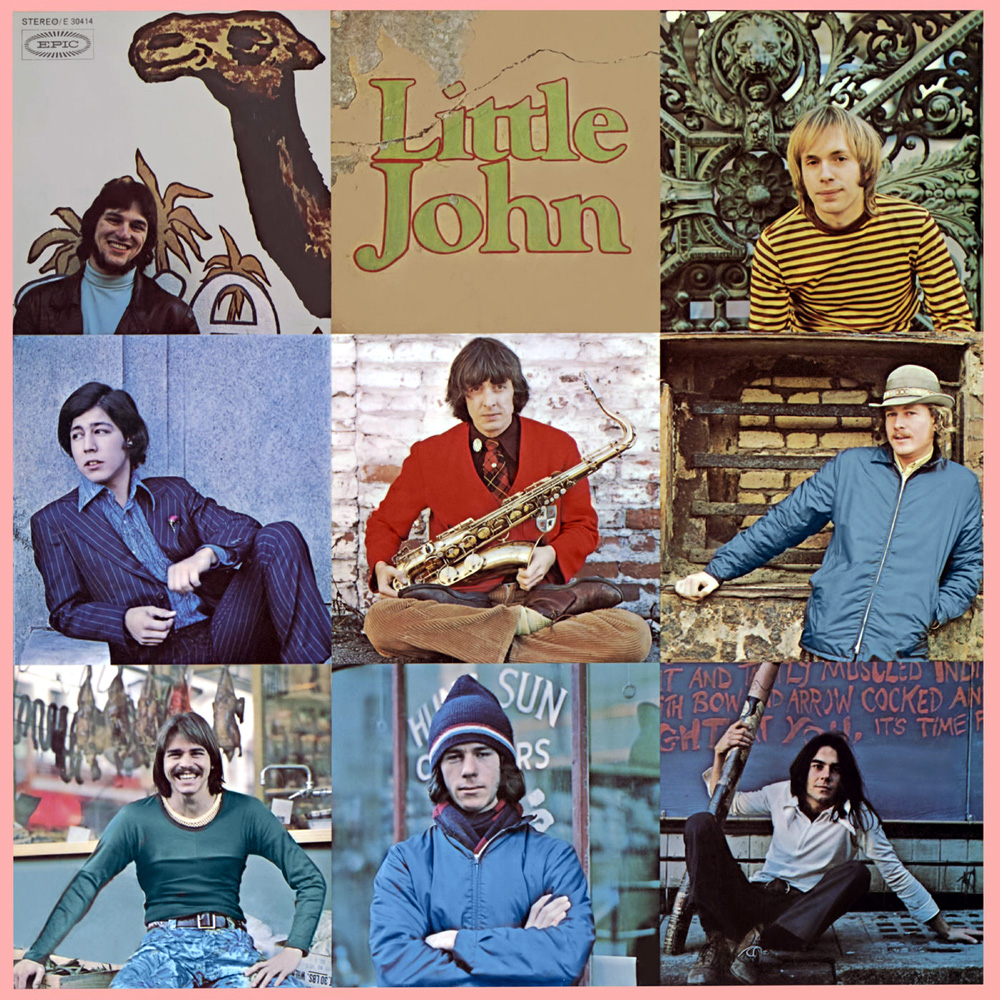
New members on brass section, and a keyboardist. All musicians dominating the groove sphere, Germain Wallace (saxophone and flute), Jon “Chicken” Greg (vocals), Jim Tompkins (trumpet and flügelhorn), Richard Lewis (trombone), Lex Silva (bass), Sal Saccardo (drums, percussion and vocals), Dan Buttington (organ, piano and vocals on the track “Thinking 'Bout You” ) and John Hart (guitar and vocals), who's the only Englishman, not to forget Bill Atwood who plays trumpet on all songs.
For Example is an another band from the SWF-broadcast vaults, with their recording they did in 1973. The band, founded in the late sixties, consisted of students of various study fields. In the beginning they played, under the name Frida III, cover versions of sixties hits, but after they had been taken on for 2 productions by the State Theatre Tübingen, they changed their music style, added three wind players with jazz experience and formed For Example. At first they played pieces of their favourite bands Chicago and Blood, Sweat and Tears, but their repertoire also comprised soul numbers with horn sections.
Step by step they added self composed titles and found their own music style, still influenced by their favourites. Still unsigned they were invited to the legendary 2nd German Rock Festival on Burg Herzberg in summer 1971, where all leading German groups, from Frumpy to Guru Guru got together and the big audience was impressed by For Example. In 1972 they´ve fought in vain for the release of a album on CBS records. A demo tape had been produced at Jankowski Studio in Stuttgart, but after a change of the management, CBS was not further interested to release the recordings.
That´s why the band called these "Cancelled". The SWF broadcast invited them in 1973 to do a recording session of 4 titles. This is the chance to listen to a long forgotten band.
Tracks
1. Of Our Freedom (Gerhard Glombik, Micha Franz) - 4:58
2. Turn Me Back (Gerhard Glombik, Micha Franz) - 4:29
3. Spätlese (Hanspeter Schickle, Gerhard Glombik, Jörn Heher) - 5:52
4. Das Lied Der Keuschen Jungfrau (Hanspeter Schickle, Günther Schmid) - 0:59
5. Commercial Song (Hanspeter Schickle, Günther Schmid) - 4:10
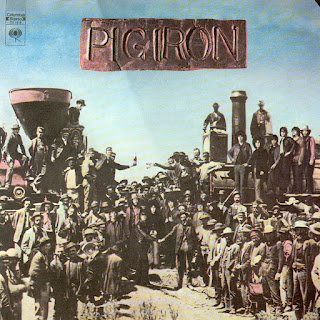
The only self-titled album from New York based, Pig Iron. A highly talented band, unfairly pushed into oblivion. Former and leader of “Pig Iron” was drummer Alan Abrahams. He was also lead vocalist and main songwriter of the group.
In 1970, “Pig Iron” recorded an album which was well received by critics, but somehow went bad on sales. Label as usual, did not renew the contract, and by 1971 the band broke up. Alan Abrahams went on to become a professional producer, worked at RCA, Capitol and Columbia Records, recorded by Miles Davis, BB King and many others … As for the fate of the other musicians: keyboardist-trumpeter Adam Ippolito and bassist Gary Van Scyoc trumpeter joined a group of “Plastic Ono Band” and a later incarnation of Elephants Memorie. Saxophonist Marty Fogel became a member of Lou Reed's band.
Four songs are original written by Alan Abrahams co-penned with musicians, not from the band. The group is very different from “Chicago” and “Blood, Sweat & Tears” actually more solid rock, blended heavenly with blues, jazz and soul.
Tracks
1. People Gonna Talk (Dan Penn, Spooner Oldham) - 3:01
2. I Put A Spell On You (Jalacy "Screamin' Jay" Hawkins) - 4:45
3. Neighbor, Neighbor (Alton Joseph Valier) - 2:48
4. I Can't Make It Alone (Carole King, Gerry Goffin) - 4:58
5. Easy Time Now (Alan Abrahams, David Ahlers, M. Barcley) - 3:18
6. Abe's Blues (Alan Abrahams) - 5:20
7. Wake Up Mr. Charlie (Lloyd Baskin) - 2:49
8. Out Of Town (Alan Abrahams, M. Barcley) - 1:34
9. Top Of The World (Alan Abrahams, David Ahlers, M. Barcley) - 2:43
Little John formed in the late 60's, in Oakland, California. Members were John Hart, Mike Pia, Sal Saccardo, Lex Silva and Vince Wallace. they recorded and released an album on Columbia/Epic tittled "Up And Down". Wallace said that the company sabotaged the album, stating, "They made us sound like a mediocre band, when we were really one of the best bands around." Wallace claims Little John was undercut because Columbia was intent on pushing Blood, Sweat & Tears and Chicago and didn't want competition from other horn bands. Ultimately, the record company abandoned the group, and they soon broke up.
On "Up and Down" appears the original version of "Bombay Calling", written by Vince Wallace, and got fame by LaFlamme's band "It's A Beautiful Day" and a different treatment from Deep Purple as "Child In Time".
Green Lyte Sunday formed in 1968 when bassist James Wyatt and keyboardist Michael Losekamp hired guitarist Jason Hollinger, reedist Fly Barlow, drummer Rick Kalb, and singer Susan Darby.
Wyatt and Losekamp hailed from Dayton, Ohio, garage rockers Mark V, which issued two singles in 1967: the speedy fuzz/farfisa rocker “Hey Conductor” (b/w “You Bring These Tears to Me,” a crooning baritone ballad with silvery organ) and the Rascals-style soul rocker “Can’t Buy My Soul” (b/w “When I Close My Eyes”). Losekamp briefly joined Pennsylvanian posters The Cyrkle for their 1967 second album Neon.
In 1969, Green Lyte Sunday cut a standalone single for small-press King, “She’s My Lover” (b/w “Lenore”). Their singular album appeared on RCA Victor in 1970. It features six Losekamp originals, including “Glen Helen,” “Happy Happy,” and “What Makes Him Happy.” The side 2 centerpiece, “High Up in the Sky,” is a Losekamp/Hollinger co-write. Green Lyte Sunday also includes compositions by Joni Mitchell (“Chelsea Morning”) and Laura Nyro (“Emmie,” “Woman’s Blues”).
Green Lyte Sunday was recorded at RCA’s Music Center of the World studios in Los Angeles. The album was produced by one Peter Shelton and engineered by Grover Helsley (Myrth, Harry Nilsson, Ivar Avenue Reunion, Friends of Distinction). US copies came in a gatefold sleeve with a psychedelic stained-glass illustration of the band on a green lamp (front and back). The innerfold features lyrics and a b&w photo of each member. “Chelsea Morning” and “Emmie” were paired for an RCA 7″.
Losekamp sang backing vocals on a 2013 reunion disc by southern rockers Dixie Peach.
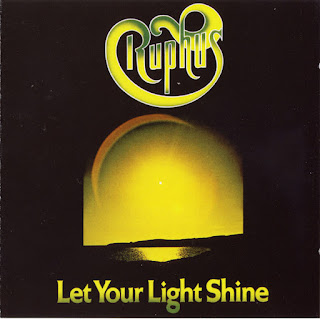
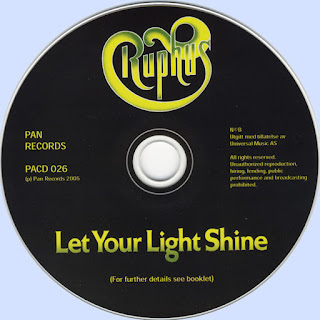
With their third album, Ruphus turned to Terje Rypdal as producer, and the result sees a decided turn away from the symphonic rock of Ransahrt towards jazz-rock. Original singer Gudny Aspaas is back on board, this time as the sole vocalist, but aside from the departure of singer Rune Ostdahl the rest of the band remains intact: Asle Milsen (bass), Thor Bendiksen (drums), Kjell Larsen (guitar), and Hakon Graf (keyboards). Rypdal provides some added synthesizer on a couple of tracks, but the famous producer lets the band shine on their own.
They get off to a great start with “Sha Ba Wah,” a high-energy fusion tune with Aspaas providing a wordless melody and sounding oddly like what might have happened if Annie Haslam had guested with a jazz group. “Corner” is a keyboard-dominated piece with an easy groove reminiscent of something Camel might have done around Moonmadness. This slides into “Second Corner,” a great jazz-rock tune a little like Colosseum II with slightly less flashy soloing. Bendiksen’s drumming is outstanding here, frantically busy with great interplay between cymbals and snare. I’m amazed that he has so few credits outside Ruphus, given the skills he shows here.
The title track, which originally started Side B of the LP, is the first track with lyrics. Aspaas does great with the contrasts between the verses, which are relatively quiet and breathy, and the chorus, where she gets to belt out the notes. Quite often I find vocals in this kind of jazz to just not work very well, but Ruphus manages to do it right, and it’s actually disappointing that Aspaas appears on only three of the seven tracks. Let Your Light Shine strikes a very appealing balance between funky jazz and accessible rock.
by Jon Davis, 2020-07-23
Tracks
1. Sha Ba Wah - 7:32
2. Nordlys (Asle Nilsen, Hakon Graf) - 1:45
3. Corner - 4:21
4. Second Corner - 6:36
5. Let Your Light Shine (Audun Tylden, Hakon Graf) - 8:17
Formed in Rockland County, New York, guitarist Bart Meola, bassist Gregg Hollister and drummer Bobby Howe came together in the late 1960s. Originally working as a quartet under the name Hit 'N' Run they became a popular act throughout lower New York and along the Jersey Shore. By the time they were signed by Buddah Records, they'd morphed into a trio, opting for the hipper nameplate "Anthem." That might also explain why Meola was referred to as "Bartholomew" on the liner notes. That or Buddah's marketing crew was completely ignorant of who they were working with.
The trio's self-titled 1970 album teamed them with Buddah in-house producer Stan Vincent. Musically "Anthem" offered up a fairly entertaining mix of commercial pop (the ballad 'Florida' and 'Ibis') and slightly more experimental numbers like the extended 'Misty Morns.' To my ears the occasional horn arrangements added a touch of blue-eyed soul to their repertoire, while on tracks like 'Ibis' their attempts at "deep" lyrics reminded me a touch of early Styx. All three members were gifted with decent voices and throughout the eight tracks they displayed a knack for crafting pretty harmonies and catchy riffs. Not sure who it was, but on the title track and 'New Day' one of the members displayed a voice that sounded uncannily like The Monkees' Michael Nesmith. Bartholomew also showcased some first-rate guitar chops - check out the AC/DC-styled riff that powers 'You're So Mean.' Needless to say, the album sold poorly, instantly ending up in cutout bins.
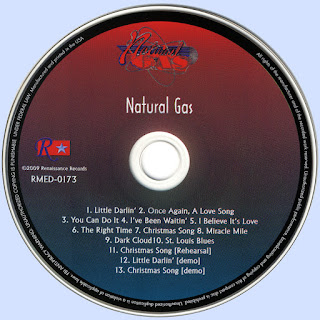
Natural Gas were a rock band featuring Peter Wood, Joey Molland, Mark Clarke and Jerry Shirley. They released one album, Natural Gas, produced by Felix Pappalardi, in 1976.
Joseph ("Joey") Charles Molland (born June 21, 1947, Liverpool, England) is a composer and rock guitarist whose recording career spans four decades. He is probably best known as a member of Badfinger. Molland left Badfinger in late 1974 due to disagreements over management. In 1975, he joined with Jerry Shirley (formerly of Humble Pie) and formed a group called Natural Gas. The band released the LP Natural Gas on Private Stock Records in 1976, and enjoyed a successful tour with Peter Frampton the following year. According to Molland, a general lack of organization led to the band's demise late in 1977. Molland and former Badfinger band mate Tom Evans recorded two albums under the Badfinger name, Airwaves in 1978, and Say No More in 1981. Molland and Evans split acrimoniously after Say No More and the two performed in rival touring Badfinger bands until Evans' death in 1983. Most of Molland's career since 1983 has been with various groups performing tours under the Badfinger name, or as "Joey Molland's Badfinger." Earlier versions of these groups sometimes included original Badfinger drummer Mike Gibbins. Molland's solo recordings have been relatively sporadic. His first, After The Pearl, was released in 1984 on Earthtone Records. His second, The Pilgrim, was released in 1992 on Rykodisc. His third, This Way Up, was independently released in 2001.
Mark Clarke (born July 25, 1950, in Liverpool, England) is a former member of Colosseum and Uriah Heep. He was the bass guitarist for Colosseum from 1970 until 1972 (and from 1994 after Colosseum's reunion), when he briefly joined Uriah Heep, performing (and co-writing) on just one studio track, "The Wizard", on their 1972 album Demons & Wizards. He also played bass on Ken Hensley's solo albums. In 1975 he went on to join Natural Gas, Ritchie Blackmores Rainbow, and in 1980 started working with Billy Squier and recorded Don't Say No, The Stroke, In the Dark and many other albums with him. In 1985 he joined The Monkees and until recently still worked with Davy Jones. Clarke has also worked with Mountain (Leslie West) and Ian Hunter (Mott the Hoople), recording albums with both of them.
Peter Wood (1950–1993) was a British musician, born in Middlesex, England. In his early years he lived with his parents in Hythe Field Avenue, Egham, Surrey. He was a member of Quiver, and Natural Gas, before he began to work closely with Al Stewart, Roger Waters, as well as Cyndi Lauper, Jonathan Kelly, Tommy Shaw and Bob Dylan just to mention a few. Wood is the co-writer of the 1976 Al Stewart single "Year of the Cat". He was one of the original members of 'The Bleeding Hearts Band' (John 'Willie' Wilson, Andy Bown, Snowy White and Peter Wood), who featured as a supporting/backing band in the 'The Wall' live shows in 1980 and 1990, and after his death the group toured extensively with Roger Waters, although with additional musicians. Wood died in 1993.
Jerry Shirley (born 4 February 1952, Waltham Cross, London) is an English rock drummer, best known for his work with the bands, Humble Pie and Fastway. Shirley began playing drums at an early age and was recruited by noted vocalist and guitarist Steve Marriott to join the newly-formed Humble Pie when he was just 17 years old. Shirley remained as Humble Pie's drummer throughout the group's entire career. He also worked on Steve Marriott's solo projects, and was a co-founder of the popular 1980s group Fastway. Shirley co-wrote Fastway's biggest hit, "Say What You Will". After Fastway disbanded, Shirley decided to reform Humble Pie in the United States. Being the only original group member, the band was called Humble Pie Featuring Jerry Shirley. Former Victory and Ted Nugent band singer Charlie Huhn joined Shirley, and together they performed as Humble Pie Featuring Jerry Shirley with several other rotating musicians for approximately ten years. During this time, Shirley also worked as a disc jockey at WNCX in Cleveland, Ohio. Aside from Humble Pie and Fastway, Shirley has worked with David Gilmour, Alexis Korner, Billy Nicholls, Syd Barrett, John Entwistle, Sammy Hagar and Benny Mardones.
Smokestack Lightnin' had THE sound... One of the truly unsung groups of the '60's Sunset Strip era, Smokestack Lightnin' was something of a house band at the Whiskey A-Go-Go, as well as at the Cheetah Club. They recorded several strong singles, recorded this LP, which was produced by Bones Howe, "Off the Wall" was surprisingly good. While there seemed to be some truth behind our earlier comments regarding wanting to find a Box Tops clone (check out the leadoff rocker "Watch Your Step"), Darling and company proved surprisingly accomplished performers, effortlessly stomping their way through a mix of blues ("Three Hundred Pounds of Heavenly Joy"), soul ("Something's Got a Hold On Me") and harder-rock oriented numbers ("Light In My Window"). Even more impressive to our ears, the band was at their best when handling the handful of original pieces, including "Well Tuesday".and made a film appearance. However, they are rarely mentioned along with the Doors, Seeds, Love, or Byrds when the top bands of the Strip are listed.
As Smokestack Lightnin' drummer Art Guy reflects: "The '60's in LA and in particular on the Sunset Strip was pure and simply magic. We had just moved from the traditional boy & girl thing with Saturday night dates, school and sports being the most important things in the world. We were at war in Vietnam and the younger generation began to question anything and everything our parents and peers stood for and promoted. This movement didn't happen overnight. It was a gradual trend, fueled in many places around the country. Our neck of the woods with the tremendous musical talent started to fuel the fires of change that spread coast to coast over the next few years. The Sunset Strip drew kids from around the country and across the globe like a magnet. The famed Whiskey-A-Go-Go, which just prior to 1966 was hosting people like Johnny Rivers and audiences in suits and ties, was transformed into a forum for the new upcoming rock stars of tomorrow. The Strip was alive with thousands of fans of this new generation. We had long hair, wore outrageous clothes, promoted free love and lots of it, drank, and smoked pot and created general mayhem wherever we went. Girls wore skirts so short, if they even bent over slightly everything was exposed. Many chose to go bra-less and panty-less. It was one wild party scene after another, with daytime in between. One other point that should be made very clear was the fact that all of the groups got along as if we were one big extended family. It didn't matter if Sly & The Family Stone or The Doors was in the audience. They loved every minute of the music and excitement and appreciated each band for their uniqueness. We all supported each other. We all loved the fans and communicated and partied with them."