Thursday, September 24, 2026

rep>>> Various Artists - 50 Years Of Genuine Houserockin' Music (1971-2021 us, superb electric blues compilation, 2021 three disc box set remaster)


You could say that Alligator Records was born in a little neighborhood South Side Chicago bar in January of 1970, almost two years before the label’s first release. That’s the first time I was overwhelmed by the most joyful, exhilarating, spirit-lifting music of my life—the blues of Hound Dog Taylor & The HouseRockers. It was at Florence’s Lounge, on a gritty side street of run-down houses, on a snowy Sunday afternoon. This life-altering music was created by just three men—Hound Dog Taylor, playing a cheap Japanese guitar with a steel slide encasing the fifth of his six fingers (true!) and singing in a high-pitched voice into a microphone plugged into a guitar amplifier; Brewer Phillips, propelling each song with ever-changing bass lines played on a Fender Telecaster guitar, and Ted Harvey, driving the band with rocking grooves played on a minimalist drum kit. It was blues, but it sure wasn’t sad blues. It was blues to make you forget your blues, to make you holler and dance and throw away your troubles. But it could turn serious, slow and cathartic. Hound Dog, playing searing slide and singing about love gone wrong in his ragged, just-on-the-verge-of-cracking voice, could reach inside you, grab you by the soul, and squeeze hard.

I had pushed my way into the dancing, happy crowd of neighborhood people. They had come here to cut loose on the weekend and celebrate their shared “down home” roots in the Mississippi Delta, and to forget about their low-paying jobs and hard life in one of the poorest parts of the city. Once they had figured out that I wasn’t a cop, they weren’t concerned about the longhaired, bearded “hippy” among them. They were having too much fun.  And I, a young blues fan who had come to Chicago to immerse himself in the music he loved, thought, “This band has got to be recorded.” And so, in the spring of 1971, I started Alligator Records to record an album by my favorite musicians. It was called simply Hound Dog Taylor & The HouseRockers. Now, 50 years and over 350 albums later, Alligator Records is still releasing recordings by my favorite musicians.

The promotional flyer for that first album was headlined “Genuine Houserockin’ Music,” and that’s been Alligator’s slogan ever since. Not only does it pay tribute to Hound Dog’s band, but it also has a deeper meaning. Genuine because Alligator’s music is rooted in the blues tradition, even when it stretches beyond a purist definition of blues. It’s a musical tradition created by oppressed Black people to carry them through hard times and bind their communities together. It’s created by musicians who have honed their music to meet the emotional needs of live audiences, not by programming synthesizers in their bedrooms. House instead of “theater” or “arena” or “stadium,” because it grew up being played in intimate settings, on front porches and in little taverns, where the audience could feel the emotions of the musicians and the musicians could feel the feedback from the audience. Blues is not music presented by the musicians, but instead it’s shared between the musicians and their audience, just like what happened every Sunday at Florence’s Lounge. And Rockin’ because it’s meant not just to move your body and your feet, but also to rock your soul. It’s music to rid you of your inner pain by ripping that pain right out of you. That’s why they say the blues “hurts so good.”

When I started Alligator back in 1971, I knew a little bit about the record business. I had learned from watching my mentor, hero and boss, Bob Koester, founder of Delmark Records, whom I had talked into hiring me as the label’s shipping clerk. I went to every Delmark recording session in 1970 and 1971, saw Bob interact with and inspire musicians, listened to him on the phone with distributors, and packed every LP Delmark shipped to critics, radio stations, mail order customers and distributors. I hung on his every word as he shared his years of accumulated wisdom learned from running a tiny blues and jazz label.

But Bob didn’t spend much energy reaching out to the growing new audience for the blues—an audience like me—college-aged kids who had discovered blues by listening to the Stones or Yardbirds or Paul Butterfield, or maybe from hearing acoustic blues at folk music festivals, like I did. They were reading new publications called Rolling Stone or Creem, and listening to “progressive rock” radio stations that were playing everything from the Beatles to Motown to Coltrane to Joni Mitchell to B.B. King. I knew that if I was so energized and excited by Hound Dog Taylor’s music, that young audience and those radio stations and those publications would love his music as much as I did. So, when I founded Alligator, a label with one LP in its catalog, I reached out to those radio stations and those publications. I sent out hundreds of promo copies, and visited as many stations as I could. And, much to my delight, the DJs and writers fell in love with Hound Dog, too. My one-man record company, housed in an efficiency apartment where I was sleeping on a mattress on the floor, was getting national and international radio play and press coverage. Plus, I was able to sell enough Hound Dog albums to afford to make the second Alligator release, a summit meeting of two of the world’s best harmonica players, Big Walter Horton With Carey Bell. By then, I had become Hound Dog’s booking agent, manager, publicist, song publisher and part-time driver. I became the same thing for Son Seals and Koko Taylor. They all needed my support, and I was the whole staff of Alligator. It was four years before Alligator was able to afford a full-time employee.

The early years of Alligator were spent mining the riches of Chicago’s fabulous blues scene. Dozens of taverns and clubs across the Black neighborhoods of the South Side and West Side booked blues bands (and, starting around 1971, some white North Side clubs did, too). You could sit 20 feet from Howlin’ Wolf at Big Duke’s or Junior Wells at Theresa’s or Otis Rush at the Wise Fools Pub. And you could hear wonderfully talented unrecorded and under-recorded bluesmen and women who deserved a national and international audience. Alligator became the home for some of those world-class Chicago artists, ranging from an unknown, rough-edged young guitarist from Arkansas named Son Seals, to Koko Taylor, “The Queen Of The Blues,” to a subtle, melodic master singer and player named Fenton Robinson. Besides full albums by Chicago artists, our six-LP Living Chicago Blues series, released in 1979 and 1980, showcased 18 more of the city’s bluesmen and women. One of them, Lonnie Brooks, a West Side guitarist with roots in Louisiana and Texas, became a long-time member of the Alligator family, bringing his funky “voodoo blues” sound to the label.

It wasn’t until 1978 that Alligator signed its first non-Chicagoan, the legendary Texas-born guitar giant Albert Collins, “The Master Of The Telecaster.”  Albert came to Alligator with a worldwide reputation as a thrilling, top-echelon blues guitarist. With his Alligator debut, Ice Pickin’ (which I co-produced with Dick Shurman), he finally made a record that matched the level of his overwhelmingly powerful live performances. Ice Pickin’ announced Alligator as more than a Chicago label. During the 1980s, my little label signed artists from all across the country.

The first was the beloved, one-of-a-kind pianist/vocalist Professor Longhair, New Orleans’ “Bach of Rock.” Fess cut his classic Crawfish Fiesta album (sadly, the last album of his career) for us. Famous blues-rock guitar heroes also found a home at Alligator. The flamboyant Johnny Winter came aboard, determined to get back to his blues roots. He made three albums for Alligator with some of Chicago’s blues giants, beginning with the much-hailed Guitar Slinger. Pyrotechnic master guitarist Roy Buchanan followed, and Alligator shepherded the re-emergence of Lonnie Mack, produced by his #1 disciple, Stevie Ray Vaughan. (In December of 1985, Albert Collins, Lonnie Mack and Roy Buchanan rocked the house at Carnegie Hall for an American Guitar Heroes night. It was a long way from Florence’s Lounge!)

Other major blues figures joined the Alligator family during the 1980s—powerhouse harmonica giant James Cotton, beloved country-tinged blues-rocker Elvin Bishop, the fabled Texas guitarist Clarence “Gatemouth” Brown (who had been recording since the 1940s) and the exuberant “Swamp Boogie Queen,” pianist Katie Webster. Besides signing established stars, we championed rising younger artists, helping them break out of their local scenes to reach national and international audiences. We released albums by a host of newcomers: Lil’ Ed & The Blues Imperials, the rough and ready band from Chicago’s West Side; The Kinsey Report, the funky band of brothers from Gary, Indiana; Little Charlie & The Nightcats, the jumping, swinging quartet from Sacramento; The Paladins, the tough roots rock trio from Southern California; Kenny Neal, the guitarist/harmonicist from Louisiana bayou country; and Tinsley Ellis, the rocking guitar hero from Atlanta. All of them burst onto world stages following their debut Alligator releases. And the unlikely all-female, all-acoustic, proudly middle-aged trio, Saffire–The Uppity Blues Women, became one of the label’s best sellers. Virtually all the Alligator artists were touring nationally and internationally, represented by professional booking agents. I often became the overseas road manager for Koko Taylor and Lonnie Brooks, and regularly carried luggage and guitar cases through Europe, Japan and Australia. Alligator has always been a “hands on” business.

The 1980s and 1990s were years of steady growth for Alligator. In the 1970s, the label released only 22 LPs. In the 1980s, that number grew to 60, and in the 1990s, we released 90 albums. The label expanded from three people to over 20. We moved from my little house in a working-class neighborhood, with its dank basement “warehouse” crammed with albums and 7000 cassettes stored in the kitchen, to two rundown storefront buildings. Alligator became a real business, with distributors across the country and around the world. Taking a leap of faith, I gambled on a new technology called compact discs, and Alligator became the first blues label to release its catalog on CDs. Meanwhile, I was in the studio constantly, producing or co-producing iconic artists like Albert Collins, Koko Taylor, Son Seals, James Cotton, Johnny Winter, Roy Buchanan, Lil’ Ed, Saffire, and more. As a fanatic fan, to work with these artists, help them create and then be the bridge that carried their music to the public, was my dream come true. And over the years Alligator attracted a series of intensely hard-working staffers who were just as dedicated to the artists and their music as I was.

We celebrated the 20th anniversary of Alligator in 1991 by hitting the road and taking the music to the people. In the spirit of the old R&B multi-artist package tours, we rented a bus and brought on board Koko Taylor & Her Blues Machine, the Lonnie Brooks band, Lil’ Ed & The Blues Imperials, Elvin Bishop and Katie Webster. They barnstormed across the Midwest and up and down the East and West Coasts, delivering hours-long shows with spontaneous jams, and spreading the gospel of Genuine Houserockin’ Music.

As we rolled into the 1990s, established artists like harmonica great Charlie Musselwhite, zydeco accordion hero C.J. Chenier and Piedmont acoustic blues duo Cephas & Wiggins found a home at Alligator. Through an arrangement with Germany’s Ruf Records, we released four albums by the amazing Luther Allison, a Chicago legend who had relocated to Europe. Between 1994 and his tragic death from cancer in 1997, Luther became the most popular artist on Alligator, returning to the U.S. to deliver thrilling, hours-long performances, including his incredibly powerful set at the 1995 Chicago Blues Festival. But we were also determined to continue to bring new names to the forefront. Australian slide guitar wizard Dave Hole, brilliant California harp player William Clarke, and visionaries like young Corey Harris and cutting-edge New York guitarist/songwriter Michael Hill, all became Alligator artists. Plus, the most charismatic blues/roots singer of her generation, Shemekia Copeland, cut the first of her seven genre-bending Alligator albums in 1998, at the age of 18.

Things turned difficult for Alligator starting in 1999, when music began being offered illegally on the Internet for little or nothing. CD sales plummeted, and thousands of record stores closed nationwide, especially independent stores that had supported Alligator. “Music should be free” became a mantra for a lot of youth. At the end of 1999, we had 22 employees. Within a few years, that number was reduced to sixteen. But still, established artists kept knocking on our door. In the next few years, Coco Montoya, The Holmes Brothers, Marcia Ball, Roomful of Blues, Tommy Castro, W.C. Clark, Guitar Shorty and the truly legendary Mavis Staples, all of whom had recorded for other labels, released Alligator albums. Our definition of the Alligator sound broadened to include roots rock singer-songwriters—Florida’s JJ Grey & Mofro and New Orleans’ Eric Lindell and Anders Osborne. Not every artist has stayed with Alligator. We weren’t the right fit for some musicians, or they weren’t the right fit for us. But many, like Koko Taylor, Lil’ Ed, Lonnie Brooks and Little Charlie & The Nightcats (now Rick Estrin & The Nightcats), spent decades with us and became close personal friends. Of course, over the years, we’ve had too many of our musician family members leave us to join the great blues band in the sky.

Today, after 50 years, Alligator remains proudly independent and still 100% dedicated to Genuine Houserockin’ Music. With a roster that includes beloved veterans like Marcia Ball, Lil’ Ed & The Blues Imperials, Elvin Bishop and Roomful Of Blues, rising stars like Selwyn Birchwood and Toronzo Cannon, and the 22-year-old sensation Christone “Kingfish” Ingram, we are committed to the past, present and future of the tradition. Now that illegal downloading has been replaced by digital streaming services reaching around the globe, Alligator’s music can be heard in China, India, and across Africa, and in other countries where it was never available in physical form. Hound Dog Taylor & The HouseRockers would be amazed to see what happened to the tiny record label, now with over 350 releases, that was created to bring their music to the world. They’d be thrilled to know that billions of people can now discover the joyous houserockin’ blues that they played every Sunday at Florence’s Lounge.
by Bruce Iglauer, 2021
Artist - Tracks - Composer
Disc 1
1. Hound Dog Taylor - Give Me Back My Wig (Hound Dog Taylor) - 3:34
2. Koko Taylor - I'm A Woman (Koko Taylor, Bo Diddley) - 4:34
3. Big Walter Horton And Carey Bell - Have Mercy (Walter Horton) - 3:43
4. Fenton Robinson - Somebody Loan Me A Dime (Fenton Robinson) - 2:56
5. Professor Longhair - It's My Fault, Darling (Miles Grayson, Lermon Horton) - 4:53
6. Son Seals - Telephone Angel (Deadric Malone) - 5:25
7. Johnny Winter - Lights Out (Mac Rebennack, Seth David) - 2:34
8. Albert Collins - Blue Monday Hangover (Deadric Malone, Gilbert G. Caple) - 5:34
9. James Cotton - Little Car Blues (Big Bill Broonzy) - 3:33
10.Albert Collins, Robert Cray And Johnny Copeland - The Dream (Bruce Bromberg, Robert Cray) - 5:32
11.William Clarke - Pawnshop Bound (William Clarke) - 4:23
12.Lonnie Mack - Ridin' The Blinds (Don Nix) - 4:23
13.Lonnie Brooks - Cold Lonely Nights (Lonnie Brooks) - 5:43
14.Luther Allison - Soul Fixin' Man (Luther Allison, James Solberg) - 4:06
15.Clarence 'Gatemouth' Brown - Got My Mojo Working (Preston Foster) - 4:47
16.Saffire The Uppity Blues Women - Sloppy Drunk (Lucille Bogan) - 3:07
17.Roy Buchanan - That Did It (Dave Clark, Pearl Woods) - 5:07
18.The Paladins - Keep On Lovin' Me Baby (Otis Rush) - 4:02
Disc 2
1. Michael Burks - Love Disease (Michael Burks) - 3:19
2. Kenny Neal - I'm A Blues Man (Walter Godbold, A.D. Prestage, Joe Shamwell) - 4:11
3. The Holmes Brothers - Run Myself Out Of Town (Wendell Holmes) - 3:25
4. Little Charlie And The Nightcats - Jump Start (Little Charlie Baty) - 2:54
5. Katie Webster - I'm Still Leaving You (Jay Miller) - 3:36
6. Smokin' Joe Kubek And Bnois King - Don't Lose My Number (Joe Kubek, Bnois King) - 3:33
7. The Kinsey Report - Corner Of The Blanket (Donald  Kinsey, Kenneth  Kinsey, Ralph  Kinsey) - 3:36
8. Carey Bell - I Got A Rich Man's Woman (Jack Leroy Welch) - 4:43
9. C.J. Chenier - Au Contraire, Mon Frere (Williams) - 3:39)
10.Mavis Staples - There's A Devil On The Loose (Brenda Burns) - 3:34
11.Michael Hill's Blues Mob - Presumed Innocent (Michael Hill, Eunice Levy) - 4:38
12.Bob Margolin - Not What You Said Last Night (Bob Margolin) - 2:48
13.Billy Boy Arnold - Man Of Considerable Taste (Billy Boy Arnold) - 4:32
14.Cephas And Wiggins - Ain't Seen My Baby (John Cephas) - 3:23
15.Long John Hunter - Marfa Lights (Jon Foose, Long John Hunter, Tary Owens) - 4:53
16.Dave Hole - Phone Line (Dave Hole) - 3:43
17.Eric Lindell - Josephine (Eric Lindell, Aaron Wilkinson) - 2:46
18.Joe Louis Walker - I Won't Do That (Tom Hambridge, Richard Fleming) - 5:01
19.Janiva Magness - That's What Love Will Make You Do (Milton Campbell) - 3:20
20.The Siegel-Schwall Band - Going Back To Alabama (Sam Lay) - 3:40
21.Corey Harris And Henry Butler - Why Don't You Live So God Can Use You (Traditional) - 2:12
Disc 3
1. Marcia Ball - Party Town (Bobby Charles) - 4:14
2. Lil Ed And The Blues Imperials - What You See Is What You Get (Lil Ed Williams) - 4:21
3. Roomful Of Blues - In A Roomful Of Blues (Chris Vachon) - 3:30
4. Billy Branch And The Sons Of Blues - Blue And Lonesome (Walter Jacobs) - 4:12
5. Christone 'Kingfish' Ingram - Outside Of This Town (Tom Hambridge, Christone "Kingfish" Ingram) - 4:09
6. Shemekia Copeland - Clotilda's On Fire (John Hahn, Will Kimbrough) - 4:26
7. Curtis Salgado - The Longer That I Live (Curtis Salgado) - 3:50
8. Selwyn Birchwood - Living In A Burning House (Selwyn Birchwood) - 4:07
9. Elvin Bishop And Charlie Musselwhite - Midnight Hour Blues (Leroy Carr) - 4:13
10.The Cash Box Kings - Ain't No Fun (When The Rabbit Got The Gun) ("Low Rollin' Joe" Nosek, Oscar Wilson) - 3:07
11.Tommy Castro And The Painkillers - Make It Back To Memphis (Bonnie Hayes, Tommy Castro) - 4:55
12.JJ Grey And Mofro - A Woman (John Grey Higginbotham) - 3:25
13.Rick Estrin And The Nightcats - I'm Running (Rick Estrin) - 4:07
14.Coco Montoya - You Didn't Think About That (Dave Steen) - 3:56
15.Tinsley Ellis - Ice Cream In Hell (Tinsley Ellis) - 4:14
16.Chris Cain - You Won't Have A Problem When I'm Gone (Chris Cain) - 3:06
17.Guitar Shorty - Too Late (Cecilia Rockstead, Dave Kearney) - 4:15
18.Nick Moss Band And Dennis Gruenling - The High Cost Of Low Living (Nick Moss) - 4:04
19.Toronzo Cannon - The Chicago Way (Toronzo Cannon) - 4:22

Wednesday, September 23, 2026

rep>>> Axiom - If Only... (1971 australia, fine blue eyed baroque folk, 2021 reissue)


In September Warners flew them to Los Angeles where they recorded the remaining tracks for their second LP If Only... with Talmy. They returned to Australia for a few months in November 1970 and then headed back to England in February 1971. If Only was released in March 1971, just after the band split. Talmy was interviewed by music writer Richie Unterberger in 2000. Almost thirty years down the track, he still spoke of Axiom group and the album in glowing terms:

"Warner Brothers hired me to record them. Super-duper band. It was a super album. Two weeks before the album was to be released on Warner, they decided to break up. And they did, and Warners said, "Bye!! If you think we're promoting this album, you're out of your fucking minds!" I was real pleased with that album. It was fun to do, they were talented, the songs were great."

Coming from the man who produced such classics as "My Generation", "You Really Got Me", "Friday On My Mind" and "Waterloo Sunset", this is high praise indeed.

Axiom had their third and last Aussie hit in early 1971 with the first single lifted from the LP, "My Baby's Gone" (the verses of which bear a suspicious resemblance to the 1980s World Party hit "Ship of Fools"). The only surviving videos of the band are performances of the song from Happening '71 and the shortlived Channel 9 pop show Move, and they also filmed a promotional clip for the song, one of the first such clips made in colour in Australia. Given that Australia wasn't to get colour TV for another four years, this was clearly done with overseas markets in mind. When released in January, the single did extremely well -- it was Top 10 by February, peaking at #8, a fact that is at odds with conventional wisdom, which says that interest in the band was waning while they were away in England.

Unfortunately the difficulties of slogging it out in England and cracking the international market undoubtedly took their toll, and it seems there was growing tension within the band by the start of 1971 and Lebler and Mudie both quit, following Doug Lavery into The Mixtures in March, which precipitated the band's break-up. Sadly, as Shel Talmy relates, this came only two weeks before If Only... was released. One can only speculate on the result if they had been able to stay together to promote it. Both album and single were released later that year in America but in the absence of the band, they sank without trace.

Brian Cadd continued to write and record with Don Mudie. They returned to Australia and released a duo single in late 1971, after which Brian hooked up with Ron Tudor to form the Bootleg label. He enjoyed a hugely successful solo career in the '70s and '80s both in Australia and overseas. He moved to America in 1975 and became a prominent member of what was dubbed the "Gumleaf Mafia", the group of Aussie expats based in L.A. that included John Farrar, Billy Thorpe and Olivia Newton-John. In recent years he has also been a member of the reformed Flying Burrito Brothers. He returned to Australia in the early '80s and eventually settled back here in the early 90s. He has worked regularly on the club and casino circuit since then. During his 1999 tour Cadd and his first wife had a 'close shave', and had to be rescued by a passer-by after their car was swept off a bridge on the Gold Coast during local floods. Brian continues to perform as well as running his own record label, among other music interests.

Glenn Shorrock returned to the UK for several years, singing and recording with the multi-national group Esperanto, before accepting an invitation to team up with members of Mississippi, which soon became the mega-successful Little River Band. Glenn reunited with Brian Cadd in 1993 for the album Blazing Salads.

Chris Stockley went on to a very distinguished career in the 70s with The Dingoes and Stockley, See & Mason.

Unfortunately we have no current information about the later careers of Don Mudie, Doug Lavery and Don Lebler, so if anyone can fill us in, we'd love to hear from you!
Tracks
1. Father Confessor
2. Hold The Phone
3. Sailing Ships
4. Talking About It
5. My Baby's Gone
6. Time And Time Again
7. Longest Day
8. Georgia By Morning
9. Matter Of Time
10.Little Ray Of Sunshine
All songs by Don Mudie, Brian Cadd

Axiom
*Brian Cadd - Keyboards, Vocals
*Don Mudie - Bass
*Glenn Shorrock - Vocals
*Chris Stockley – Guitar
*Don Lebler - Drums 


rep>>> Jorma Kaukonen And Jack Casady - Bear's Sonic Journals Before We Were Them (1969 us, fine blues based acid psych rock, 2018 digipak remaster)


From the archives of legendary sound engineer Augustus Owsley Stanley, a long-time trusted man of the Grateful Dead, 'Before We Were Them' follows the two live shows dedicated respectively to the Allman Brothers Band and Doc & Merle Watson and captures a performance held by Jorma Kaukonen and Jack Casady, guitarist and bassist of Jefferson Airplane, on June 28, 1969 at the Veterans Memorial Building in Santa Rosa, California. 

The always impeccable audio quality of the recordings made by the legendary 'Bear', recovered from the original tapes and restored - remastered for the occasion, allows us to enjoy a concert previously unreleased and only recently resurfaced in which the two great musicians, who had not yet launched into the collateral project of Hot Tuna, are joined on stage by Jefferson Airplane drummer Joey Covington. 

With him, Jorma and Jack form an impromptu power trio capable of competing in power and intensity with Cream and the Jimi Hendrix Experience, protagonists of over 70 minutes of exciting and muscular music in which blues classics such as 'Rock Me Baby' and 'Come Back Baby' and the Airplane's 'Star Track' are joined by four rarities titled for the occasion by Kaukonen and Casady ('Turnaround', 'Through The Golden Gate', 'Through The Grove', 'Inspiration In The Hall Of Arrivals') and which will make the mouths of even the completists and the most profound connoisseurs of the duo's repertoire water. 

'It's not just the youthful energy that strikes me, when I listen to these songs again; 'It's the musical dialogue that Jack and I shared in those amazing moments,' Kaukonen commented about these recordings, while Casady recalls 'the unbridled fury' of those performances that 'every day, back then, represented a new adventure for our young hearts'. 'Before We Were Them' is therefore a small, very precious treasure chest of psychedelic blues exhumed and polished to a new shine, using state-of-the-art Plangent Processes technologies (which allowed to eliminate even the smallest distortions caused by recording and playback equipment) and the mastering experience of Jeffrey Norman, a long-time collaborator of Stanley himself and the Grateful Dead.
Tracks
1. Rock Me Baby (B.B. King) - 8:32
2. Turnaround - 10:30
3. Star Track (Jorma Kaukonen) - 7:45
4. Through The Golden Gate - 13:43
5. Come Back Baby (Walter Davis) - 10:28
6. Through The Grove - 11:08
7. Inspiration In The Hall Of Arrivals - 8:07
Songs 2,4,6,7 written by Jorma Kaukonen, Jack Casady

Personnel
*Jorma Kaukonen - Guitar, Vocals
*Jack Casady - Bass
*Joey Covington - Drums

Related Acts

rep>>> AUM - Resurrection (1969 us, brilliant blues based hard psych, 2009 edition)


One of the first acts signed to Bill Graham's Fillmore label, 1969's "Resurrection" teamed the band with producer David Rubinson. As one might have guessed from the album title (let alone the back cover which showed three crosses), their sophomore effort found the band pursuing a pseudo-religious agenda. In spite of occasionally clunky lyrics and an irritating degree of echo, Ceballos-penned material such as "God Is Back In Town," the ballad "Only I Know" and " Today and Tomorrow" wasn't half bad. 

Boasting a nifty Ceballos guitar solo, the stately title track was our nomination for standout track. Elsewhere, the driving "Bye Bye Baby" and "Little Brown Hen" recalled Quicksilver Messenger Service. Commercially the set did nothing; the trio calling it quits shortly thereafter.
by Scott Blackerby
Tracks
1. God Is Back In Town - 5:22
2. Resurrection - 5:24
3. Only I Know - 3:55
4. Bye Bye Baby - 3:42
5. Today and Tomorrow - 7:28
6. Little Brown Hen - 2:48
7. Aum - 6:01
8. Pachuko Boogie - Preserve Your Mama (A. Ammons) - 1:15
All songs written by Wayne Ceballos except where noted.

AUM
*Wayne Ceballos - Guitar, Organ, Lead Vocals, Harmonica
*Ken Newell - Bass, Vocals
*Larry Martin - Drums, Vocals

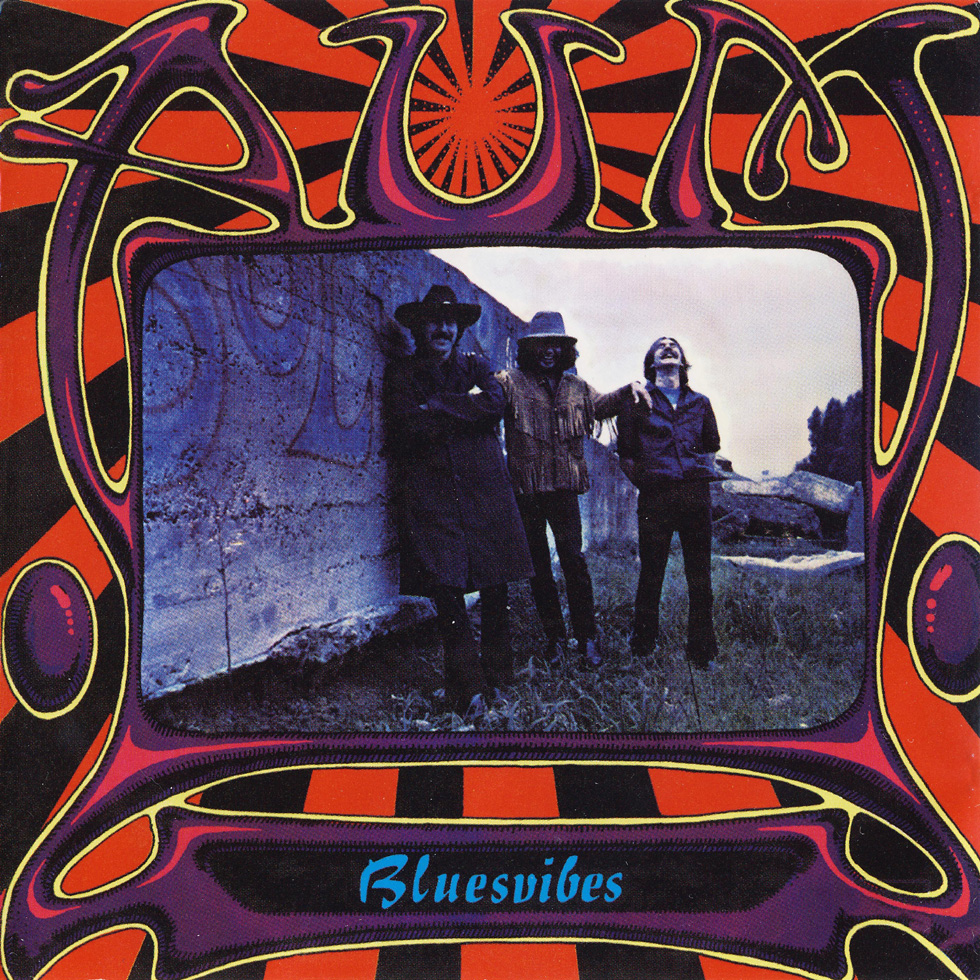
1969  AUM - Bluesvibes

Tuesday, September 22, 2026

rep>>> AUM - Bluesvibes (1969 us, power west coast heavy blues psych rock)


One of the great lesser-known San Francisco bands, AUM was a classic rock power trio, inspired by the likes of the Jimi Hendrix Experience and Cream, and led by the talented multi-instrumentalist and singer Wayne Ceballos. The band was first brought to the attention of Bill Graham by San Francisco's premier photographer, Jim Marshall.

Initially signed by the London-affiliated Sire label, as one would expect from the title, the group's 1969's "Bluesvibes" found them working in a distinctively blues-vein. Reflecting the band's live act, the Richard Gotthrer produced debut featured a series of seven extended jams, (the shortest song clocking in at 4 minutes). 

With Ceballos writing the majority of the material, in spite of period excesses (e.g. aimless soloing), originals such as "Mississippi Mud" and "Chilli Woman" weren't half bad. Moreover, Ceballos proved a decent singer, injecting considerable energy into his performances. Among the few missteps, the band's ponderous cover of John Loudermilk's "Tobacco Road" would've been suitable for Vanilla Fudge. Commercially the set proved a non-entity; quickly vanishing into cutout bins.
by Scott Blackerby
Tracks
1. Tobacco Road (John Loundermilk) - 6:54
2. Mississippi Mud - 4:03
3. My Bridge Blues - 5:41
4. Chilli Woman - 4:34
5. Little Help from You - 6:54
6. Movin' Man - 7:48
7. You Can't Hide - 7:24
All songs by Wayne the Harp Ceballos unless as else stated

AUM
*Wayne Ceballos - Guitar, Organ, Lead Vocals, Harmonica
*Ken Newell - Bass, Vocals
*Larry Martin - Drums, Vocals

rep>>> Fuse - Fuse (1969 us, awesome hard rock with prog touches, 2001 bonus tracks edition)


Fuse offers a fascinating glimpse into the musical beginnings of Rick Nielsen and Tom Petersson before superstardom beckoned as members of Cheap Trick, but it also stands on its own as a prime example of keyboard driven psychedelic pop, circa 1969.

Fuse was the predecessor of the famous 70's hard rock american band Cheap Trick, earlier called The Grim Reapers. As Fuse a solitary album was issued prior to guitarist Rick Nielsen and bassist Tom Petersson allying themselves with ex NAZZ members vocalist Robert 'Stewkey' Antoni and drummer Thom Mooney for a revised NAZZ.

Great tunes, my favorites being 4/4 3/4, Show Me and To Your Health. Rick Nielsen mainly plays Keyboards on this, but he does display some early signs of songwriting ability as in Show Me and To Your Health.

The singer was only 17 years old when this was released, what a strong voice for a kid!!! Tom Peterson has to be one of the most UNDERrated Bass players in popular rock.

Just listen to his tight, chunky-bass on this album, and he was only 19 years old! Each track is different, nothing seems repetitive. That is to say, the guitarist, keyboards everyone sounds different on each track. Do not expect to hear any "Cheap Trick sounding" material on this album. It is Hard-rock, a bit progressive, hard hitting music.

This is a very good album, played by a bunch of Rockford kids, and is highly recomended.
by J.D. Kammerer
Tracks
1. Across The Skies (Rick Nielsen, Joe Sundberg) - 4:35
2. Permanent Resident (Joe Sundberg, Craig Myers) - 4:24
3. Show Me (Rick Nielsen) - 4:17
4. To Your Health (Rick Nielsen) - 6:00
5. In A Window (Rick Nielsen, Joe Sundberg) - 5:54
6. 4/4 3/4 (Joe Sundberg, Craig Myers) - 4:2
7. Mystery Ship (Rick Nielsen) - 3:23
8. Sad Day (Rick Nielsen) - 5:49
9. Hound Dog (Jerry Leiber, Mike Stoller) - 2:55
10.Cruisin' For Burgers (Joe Sundberg, Craig Myers) - 5:01

Fuse
*Rick Nielsen - Guitar, Keyboards
*Tom Petersson - Bass
*Joe Sundberg - Vocals
*Chip Greenman - Drums
*Craig Myers - Guitar

Text Host

Monday, September 21, 2026

rep>>> Freight Train - Just The Beginning (1971 us, great blues psych rock)


The band, Freight Train, was formed by The Reds, founding member, Rick Shaffer, in 1968.  The line-up went through many personnel changes before arriving at the one that appears on the 1971 album, "Just The Beginning," on Fly By Nite records, a subsidiary of the Lost-Nite and Crimson labels, owned by Philadelphia record man Jerry Greene.   Greene released a catalog of doo wop and oldies hits in the 1960’s, most notably the hit record by The Soul Survivors, "Expressway To Your Heart,"  and today owns the compilation label, Collectibles, located in Narberth, PA.

The Freight Train albums’ line-up was Rick Shaffer on lead guitar and back-up vocals, Steve Martina on guitar and lead vocals, Jim Peters on bass, and Tommy Geddes on drums.  The album is a collection of Chicago blues standards done in a aggressive Paul Butterfield/British blues style, that included some of the great master works of Howlin' Wolf, Willie Dixon, T-Bone Walker, Sonny Boy Williamson and the great Magic Sam.  It also contained a rare track, "Rollin Man," by British blues guitarist Peter Green.  The album was engineered by Joel Fein, for his outstanding R&B style.  Fein’s signature on the soundtrack, "The Buddy Holly Story," starring Gary Busey, is legendary.

The band played all the venues of the time period, from outdoor Festivals to University gigs, coffee houses, and as the opening act for other more established bands.  Then, just prior to recording their next album, this time of original blues and R&B, Steve Martina decided to totally stop playing music.  His departure created quite a hole in the line-up, especially since Martina was principle vocalist and writer of the new material that had a J Geils / Butterfield Blues sound approach.  

Nevertheless, Martina was replaced by guitarist/vocalist, John Rostkowski, a talented and distinctive vocalist/songwriter.  The next, and final, upset for the band was changing management because of an unfulfilled promise to get the band off Fly By Nite, and on RCA.  So, in 1973, Freight Train pulled into the station and disbanded. 

Today, “Just The Beginning,” is recognized as a nugget of "Heavy Psych Blues" in the collectors market, and the "Acid Archives.”  In 2011 the album resurfaced on CD on the  Russian Federation label, Vitt.  And, original 1971 copies of the album sell on the internet for whatever a collector will pay, sometimes as much as $225.    In 1977, Shaffer, Geddes, and Peters, got back together, added keyboardist, Bruce Cohen, and formed, The Reds.
Tracks
1. Everything's Goona Be Alright (Little Walter Jacobs) - 3:27
2. Papa Ain't Salty (T-Bone Walker) - 2:43
3. So Many Roads (Marshall Paul) - 7:08
4. Unseen Eye (Sonny Boy Williamson) - 2:43
5. Built For Comfort (Willie Dixon) - 2:49
6. Same Old Blues (Magic Sam) - 2:51
7. I Loved Another Woman (Peter Green) - 3:01
8. Baby What You Want Me (Jimmy Reed) - 3:35
9. Rollin Man (Peter Green, Clifford Adams) - 2:22

Freight Train
*Rick Shaffer - Lead Guitar, Vocals
*Steve Martina – Guitar, Lead Vocals
*Jim Peters – Bass
*Tommy Geddes - Drums

rep>>> Wicked Lady - The Axeman Cometh (1968-72 uk, fantastic heavy fuzz psych rock, 2012 reissue)


Wicked Lady exemplifies the "record collector" bands that gain new life through reissues "The Axeman Cometh" and "Psychotic Overkill". Their appearance marked some belated recognition for the power trio, which Northampton singer-guitarist Martin Weaver formed in 1968 with drummer "Mad" Dick Smith and bassist Bob Jeffries. However, Wicked Lady never came within a whisper of the stratospheric status attained by Cream, or the Jimi Hendrix Experience.

The band's liberal use of feedback -- and large biker following -- kept them relegated to clubs, even during the twilight hours of the psychedelic era. Awash in drink and drugs, Wicked Lady split up in 1970, but Smith and Weaver soon regrouped with new bassist, Del "German Head" Morley. The new lineup duly set about documenting its existence, as captured on Psychotic Overkill -- whose feel is looser than Axeman Cometh. The effect is a shotgun marriage of Black Sabbath-style rifferama, supported by a less risk-taking rhythm section. Weaver's vocal style lacks charisma, but his wah-wah and fuzz-driven guitar style carries the day.

The highlights include a bluesy cover of Hendrix's "Voodoo Child," the sex 'n' drugs snapshot of "Sin City," and the howling, 21-minute epic, "Ship Of Ghosts." But Wicked Lady's erratic ways proved too difficult for clubowners, who eventually refused to let them play. (At one gig, the band reportedly played the same song over and over until an irritated management pulled the plug on them.) Wicked Lady imploded in 1972, but Weaver rebounded that same year by joining the Dark, a more psychedelic- and progressive-outfit.

Their Round The Edges album became a Holy Grail for collectors -- because only a handful of copies were made for band members and their associates. Weaver next teamed with classically-trained keyboardist Dave "Doc" Wadley -- who'd worked with a pre-Sabbath Tony Iommi -- in the Mind Doctors.
by Ralph Heibutzki.
Tracks
1. Run The Night - 5:08
2. War Cloud - 7:37
3. The Axeman Cometh - 6:52
4. Life And Death - 9:58
5. Wicked Lady - 6:01
6. Out Of The Dark - 10:14
7. Rebel - 3:32
8. Living On The Edge - 10:09
All songs by Bob Jeffries, Dick Smith, Martin Weaver

Wicked Lady
*Bob Jeffries - Bass
*"Mad" Dick Smith  - Drums
*Martin Weaver - Guitars, Vocals

1972  Wicked Lady - Psychotic Overkill (2012 Guerssen)
Related Act

Alex Taylor - Dinnertime (1972 us, tight folk blues rock)


Alex Taylor's blues throat couldn't be more unlike his singing siblings, James, Kate and Livingston. As faraway from a sensitive singer/songwriter as could be, Taylor gives the blues treatment to classics like Howlin' Wolf's "Who's Been Talkin'" as well as to songs by contemporary writing greats, from Randy Newman ("Let's Burn Down the Cornfield") to Bob Dylan ("From a Buick Six"), as well as by lesser-knowns like Jesse Winchester ("Payday"). With searing guitars and evocative organ at work, the record serves as a sampler of what was going on at Muscle Shoals and Ardent Studios in the early '70s and captures the Memphis soul sound of the era. This is his second recording for Capricorn.
by Denise Sullivan
Tracks
1. Change Your Sexy Ways (Alex Taylor, Chuck Leavell, Jimmy Nalls) - 7:07
2. Let's Burn Down The Cornfield (Randy Newman) - 4:25
3. Comin' Back To You (Scott Boyer) - 4:15
4. Four Days Gone (Stephen Stills) - 3:56
5. Payday (Jesse Winchester) - 4:53
6. Who's Been Talkin' (Chester Burnett) - 4:45
7. Who Will The Next Fool Be (Charlie Rich) - 4:50
8. From A Buick Six (Bob Dylan) - 4:54

Musicians
*Alex Taylor - Vocals
*Bill Stewart - Drums
*Charles Chalmers - Vocals
*Charlie Hayward - Bass
*Chuck Leavell - Keyboards, Piano, Vibraphone
*Donna Rhodes - Vocals
*Earl Sims - Percussion
*Ginger Holladay - Vocals
*Jaimoe - Congas, Percussion, Timbales
*Jimmy Nalls - Guitars
*John Hughey - Steel Guitar 
*Johnny Sandlin - Bass, Moog Synthesizer
*Lou Mullenix - Percussion, Timbales
*Mary Holladay - Vocals
*Paul Hornsby - Keyboards, Organ
*Roger Hawkins - Congas, Percussion, Tambourine
*Sandra Chalmers - Vocals
*Sandra Rhodes - Vocals 
*Scott Boyer - Guitars, Vocals
*Steve Smith - Vocals
*Temple Riser - Vocals
*Wayne Perkins - Bass, Guitar, Slide Guitar

Related Acts
1970  Cowboy - Reach For The Sky
1971  Cowboy - 5'll Getcha Ten (2014 remaster) 

Sunday, September 20, 2026

rep>>> Crazy Horse - Scratchy • Complete Recordings (1962-73 us, exceptional country rock, 2005 double disc issue)


Crazy Horse’s 1971 self-titled debut, with Danny Whitten, Nils Lofgren and Jack Nitzsche, remains a roots-inflected, heavy-rock touchstone, boasting a uniformly strong set balancing mournful ballads and left-field rockers (notably, an ode to erectile dysfunction and a party stomper about scoring heroin). Just a year later, the follow-up Loose found Talbot and Molina fronted by an anonymous collection of minor leaguers, delivering limp country-rock several notches below the not exactly hearty CSN/Eagles standard. Rhino’s “limited edition” supplements the official releases with the usual oddments and arcana, but given the original lineup’s too-brief run, these barrel scrapings inspire a benevolent indulgence. The simulated innocence of the early-’60s close harmony and Brill Building knockoffs that close the set is sweet enough to induce tears.
by Scott Manzler

Neil Young may not ever allow his Reprise outtakes to be released, but that doesn't mean there's not a lot of equally cool stuff from an orbit near his that can't be enjoyed -- and Rhino Handmade has hit a mother lode with this double-CD set, which offers a lot more than even dedicated Crazy Horse fans may expect. Thanks to their convoluted membership history and a series of label changes, Crazy Horse had one of the stranger release histories of almost any '70s band -- their stuff and, to some extent, their sound are all over the map. Scratchy: 

The Complete Reprise Recordings makes a strong case, however, for the primacy of the first lineup and their work on Reprise, assembling all of their released work for the label plus the equivalent of an album's worth of outtakes and radio spots, and two tracks by Danny & the Memories, the group that preceded the formation of Crazy Horse by five years or so. The group's self-titled debut album has bounced in and out of print for the last 34 years, but here it's been remastered with the kind of attention that makes it sound like one is hearing it for the first time -- the close sound of the acoustic guitars on "I Don't Want to Talk About It" and the roaring electric instruments on "Gone Dead Train," "Dance, Dance, Dance," and "Downtown" are impressive to these ears, the harder-rocking numbers now displaying the raw power and impact that the group exuded on-stage; the remastering job has undone the inevitable flattening process that went into the vinyl release, so that Billy Talbot's bass, in particular, now gets a killer showcase, and Jack Nitzsche's piano on "Carolay" gets as much play as the massed acoustic guitars that carry the rhythm figure at the center of the song. 

What's more, the crispness of the sound has brought the singing out in vivid detail -- if the LP could have sounded this bracing and powerful, this band might well have seen the success it deserved. The second half of the first CD is filled out with the tracks off of their second album, Loose; thanks to the ensuing lineup changes that took place, they're a bit of a letdown after the 11 gems from Crazy Horse, though not bad on their own terms -- the group plays from less melodic strength and raw inventiveness, but make up for it with a lot of enthusiasm and positive vibes in their sound, especially on the acoustic numbers such as the gorgeous "One Thing I Love" or "All Alone Now." 

The real treat, however, is the second disc, which opens with a string of extraordinary outtakes, including the title track -- the outtakes sound incredible and feature exceptional playing, and "Scratchy" by itself is worth the price of admission, 12 minutes of stunning electric interaction; and it's followed by the gorgeous acoustic piece "Dear Song Singer," plus a long version of "Downtown"; the first Danny & the Memories cut, "Can't Help Loving That Girl," was, in its own time, a throwback to early-'60s doo wop style, while the second, "Don't Go," was much more contemporary circa 1965. The set is attractively designed, with separate pockets for each disc and a beautifully designed booklet with extensive annotation, all in a very practical slipcase-style package. It's a bargain for any fan of this band or any of its members, and worth tracking down.
by Bruce Eder
Tracks
Disc 1 "Crazy Horse" 1971
1. Gone Dead Train (Russ Titelman, Jack Nitzsche) - 4:10
2. Dance, Dance, Dance (Neil Young) - 2:13
3. Look At All The Things (Danny Whitten) - 3:14
4. Beggars Day (Nils Lofgren) - 4:33
5. I Don't Want To Talk About It (Danny Whitten) - 5:20
6. Downtown (Danny Whitten, Neil Young) - 3:16
7. Carolay (Jack Nitzsche, Russ Titelman) - 2:53
8. Dirty, Dirty (Danny Whitten) - 3:33
9. Nobody (Nils Lofgren) - 2:39
10.I'll Get By (Danny Whitten) - 3:08
11.Crow Jane Lady (Jack Nitzsche) - 4:27
"Loose" 1972
12.Hit And Run (John Blanton) - 2:41
13.Try (George Whitsell) - 3:18
14.One Thing I Love (Greg Leroy) - 2:37
15.Move (George Whitsell) - 3:13
16.All Alone Now (George Whitsell) - 2:46
17.All The Little Things (Greg Leroy) - 5:01
18.Fair Weather Friend (Greg Leroy) - 2:41
19.You Won't Miss Me (George Whitsell) - 2:47
20.Going Home (Greg Leroy) - 2:50
21.Don't Believe It (George Whitsell) - 3:07
22.Kind Of Woman (John Blanton) - 4:25
23.One Sided Love (George Whitsell) - 3:12
24.And She Won't Even Blow Smoke In My Direction (George Whitsell) - 1:21
Disc 2
1. Dirty, Dirty (Alternate Version) (Danny Whitten) - 3:56
2. Scratchy (Takes 1-3) (Unknown) - 12:12
3. Dear Song Singer (Unknown) - 3:10
4. Downtown (Unedited Long Version) (Danny Whitten, Neil Young) - 10:42
5. Susie's Song (Takes 1-5) (Nils Lofgren) - 6:13
6. When You Dance You Can Really Love (Neil Young) - 2:52
7. Radio Spot - 1:07
8. Danny And The Memories - Can't Help Loveing That Girl (Jerome Kern, Oscar Hammerstein II) - 2:03
9. Danny And The Memories - Don't Go (Danny Whitten) - 1:59
Tracks 1-5 from "Crazy Horse" sessions
Track 6 recorded January 1973
Track 7 Reprise  1971
Tracks 8-9 Danny And The Memories Valiant single  1962

1968  The Rockets - The Rockets