Tuesday, January 2, 2024

Gordon Lightfoot - Did She Mention My Name? / Back Here On Earth (1968 canada, brilliant protest folk rock)


Within about a minute of the start of “Wherefore & Why,” the opening track on Gordon Lightfoot’s Did She Mention My Name?, you knew something was a little different. This third album, released in April 1968, featured the fast-rising Canadian troubadour’s first use of strings, to elegant effect. But the essence was the same: Lightfoot, 29 at the time of the LP’s release, seemed to have an inexhaustible supply of top-drawer compositions to call upon. By the time it emerged, he had already written more than 200 songs.

The new batch was arranged by John Simon, who took over as Lightfoot’s producer, for this album only, at a time when he was becoming one of America’s hottest studio properties. He had just overseen the Songs of Leonard Cohen album, released a few weeks earlier, and as 1968 went on, Simon would also produce the equally hallowed Music From Big Pink by The Band, Blood, Sweat & Tears‘ Child Is Father To The Man, and Big Brother & the Holding Company’s Cheap Thrills.

Lightfoot’s new set contained some of the most memorable songs of his early years, including the intense “Black Day In July,” written about the Detroit riots (“pulsating rhythm item with compelling lyric content,” said Billboard) and the gorgeous, heartbreaking “The Last Time I Saw Her,” which would attract a hit country cover by Glen Campbell. Its words eloquently described the end of an affair: “The last time I saw her face/Her eyes were bathed in starlight/And her hair hung long/The last time she spoke to me/Her lips were like the scented flowers/Inside a rain-drenched forest.”

“It’s about the breakup of a marriage,” wrote Lightfoot in the liner notes to 1999’s Songbook. “In a way, you’re predicting what’s going to take place, and then it happens. In some sense you play the scene out in your mind, and after the fact, it hits you how close you were to the mark. It makes it a little tough to perform sometimes, but not tough enough to keep a great song down. In a way, it covers the same ground as ‘If You Could Read My Mind’ did years later.”

The album also featured the whimsical “May I,” the much-played “Pussywillows, Cat-Tails,” the unusually brassy “I Want To Hear It From You,” and the more folk-based title track, of which Lightfoot said: “It goes back to your high school sweetheart. You know you’re never going to date her again, but you meet up with a friend from the home town and you ask after her, and about all the other things you’ve missed since you moved away. You want to reconnect with your roots.”

Like its predecessor The Way I Feel, released 12 months earlier, the new LP featured lead acoustic guitar by Red Shea and bass by John Stockfish. Joining the team were widely-traveled drummer Herbie Lovelle and another hugely in-demand studio man, lead guitarist Hugh McCracken.

Lightfoot’s achievements in his home country were recognized at the MIDEM music industry fair in Cannes. He was given the MIDEM International Trophy Award as “bestselling Canadian male singer” in the year between July 1966 and June 1967. Did She Mention My Name? achieved a Canadian chart position, at No.21, and his live engagements included folk festivals in San Diego and San Francisco – the latter his West Coast debut – and a residency at the Troubadour in Los Angeles in April.

In March, he was also the subject of a Canadian Broadcasting Company (CBC) Show of the Week TV special called Wherefore & Why, after the LP’s opening song, in which he featured with Toronto scenester “Rompin’” Ronnie Hawkins and folk singer Bonnie Dobson, all signing Gordon’s songs. Hawkins had recently released a single of his countryman’s “Home From The Forest,” a track from The Way I Feel.

Covers of Lightfoot’s expanding catalog were coming from all angles: his friend George Hamilton IV recorded another track from that set, “Song For A Winter’s Night,” while 20th Century Fox signings the Raftsmen cut “Hands I Love,” as had Harry Belafonte a few months earlier. The singer-songwriter’s success was spreading to the big screen, too: he wrote and sang the theme tune for the 1968 movie Fade In, starring Burt Reynolds.

Canadian trade magazine RPM was sounding justifiably proud of the artist’s ever greater profile in a January 1968 report, just before he won Top Male Vocalist in the publication’s annual music poll. “The Lightfoot explosion is just about the most exciting thing that has happened to the Canadian music scene,” they wrote. “He has an over-abundance of talent as a composer and artist and the world is just beginning to realise it.”

As 1968 came to an end, Gordon Lightfoot would celebrate his 30th birthday with a great sense of satisfaction. His busy year, and an intense period of creative and commercial growth, culminated in a fourth studio album, Back Here On Earth, that would prove to be his last studio set for United Artists. The name of the gifted singer-songwriter was now on lips far beyond just his native Canada.

Another album meant another change of producer, as Lightfoot, again recording in Nashville, now worked with New Yorker Elliot Mazer. Like John Simon, who oversaw Did She Mention My Name?, released at the beginning of the year, Mazer would count The Band among his credits, as well as Bob Dylan, Janis Joplin, and Neil Young. As earlier, the new set included songs that the artist would revisit when his profile was even higher, notably the sorrowful and elegant “The Circle Is Small,” which he revived for Endless Wire almost a decade later.

The LP had a more simple, acoustic feel, with support only from guitarist Red Shea and bassist John Stockfish, but given extra depth by Lightfoot’s own accompaniment on both six and 12-string guitars. Another track, the haunting “Affair On 8th Avenue,” drew on his frequent visits to the US, where he was now playing clubs such as the Bitter End in New York and the Cellar Door in Washington.

“Cold Hands From New York” was another diary entry by a stranger in Manhattan. “I came down through Albany to New York to find what I’d been missin’,” he wrote, in a travelog with references to such landmarks as the Lincoln Tunnel and Central Park. “I came down to live alone in New York, the city of the living/There were fortunes at my feet but most of men were taking, none were giving, or forgiving.”

No fewer than eight of the LP’s 11 tracks attracted covers, including one the following year by Waylon Jennings, who gave it an attractive, slowed down country ballad treatment with vocal accompaniment from the Kimberleys. Another cut from Back Here On Earth, “Gypsy,” gained a 1974 rendition by Petula Clark.

Lightfoot’s touring in support of the album included a show at UCLA’s Royce Hall in Los Angeles, where Robert Hilburn of the L.A. Times wrote: “He weaves folk, country and mainstream pop influences into a distinctly contemporary style of his own. His lyrics, melodies and delivery share a common honesty and intensity.” Time magazine afforded Lightfoot prestigious coverage as the record emerged, and early in 1969, his preeminence was underlined as he won RPM’s Best Folk Singer title, keeping Joni Mitchell in second place and Leonard Cohen in third.
by Paul Sexton, January 1, 2024 and November 1, 2023
Tracks
1. Wherefore And Why - 2:54
2. The Last Time I Saw Her - 5:11
3. Black Day In July - 4:13
4. May I - 2:17
5. Magnificent Outpouring - 2:28
6. Does Your Mother Know - 3:36
7. The Mountains And Maryann - 3:35
8. Pussywillows Cat Tails - 2:49
9. I Want To Hear It From You - 2:21
10. Something Very Special - 3:17
11. Boss Man - 2:05
12. Did She Mention My Name - 2:26
13. Long Way Back Home - 3:05
14. Unsettled Ways - 1:52
15. Long Thin Dawn - 2:59
16. Bitter Green - 2:43
17. The Circle Is Small - 3:26
18. Marie Christine - 2:52
19. Cold Hands From New York - 4:17
20. Affair On 8th Avenue - 3:26
21. Don't Beat Me Down - 3:14
22. The Gypsy - 2:46
23. If I Could - 4:11
All Music and Lyrics by Gordon Lightfoot
Tracks 1-12 from 1968 LP "Did She Mention My Name?"
Tracks 13-23 from 1968 LP "Back Here On Earth"

Personnel
*Gordon Lightfoot - Vocals, Acoustic, Rhythm Guitars
*John Arthur Stockfish - Bass
*Laurice Milton Shea - Lead Guitar
*Herb Lovelle - Drums (Tracks 1-12)
*Huey McCracken - Guitar (Tracks 1-12)
*John Simon - String Arrangements (Tracks 1-12)

1976  Summertime Dream  

Sunday, December 31, 2023

Kush - Presents Snow White ... And The Eight Straights (1974 australia, blazing prog brass jam rock, 2007 digipak remaster and expanded)


Kush came together around late 1971, emerging out of the 20-piece Barry Veith Big Band. Duff was the last to join and he went through the usual audition process, impressing the other musicians with his voice ("I think they liked my voice because I didn't sound like Joe Cocker or someone like that," Duff recalled recently) and his dress sense! So the original line-up was: Duff (Vocals, percussion), John Ellis (Alto & baritone sax, clarinet; band leader/musical director), Roger Pell (Guitar), Ron Anderson (Tenor sax, flute, piano), John Santos (Trumpet, Flugel horn), Colin Chapman (Trumpet, Flugel horn), Rob Matthews (Bass) and Larry Kegn (Drums).

John Ellis recalled recently, "When we were auditioning singers and Jeff came in, we had our wives and girlfriends there listening and a lot of them instantly said 'that's the guy you've gotta have'. I loved Jeff's voice because it reminded me of David Clayton Thomas. The other guys liked some of the other, more commercial singers because at that stage we were doing all covers like 'Proud Mary' and 'River Deep Mountain High'. I'd done most of the arrangements and John Santos had done some arrangements, like for Blood Sweat & Tears' 'Spinning Wheel'. We held out and said Jeff is exactly what this band needs, a singer with a voice a bit different. Seeing it was my band, I'd formed it and John was the other arranger (so) we won and Jeff came in. And then we probably started doing more and more Chicago and BS&T songs because of Jeff's voice."

Duff had an interesting early career; he'd started singing and drum lessons by the time he was 12 years old. His earliest bands (around 1966 and 1967) included Why and Not Only But Also. By late 1969 and into 1970 he was fronting Melbourne pop band The (New) Avengers. The Avengers had been around in one form or another since 1967, but by the time Duff joined there were no original members left in the ranks. The guitarist then was David Briggs who later went on to international fame with the Little River Band. The Avengers had broken up by the end of 1970. Incidentally, at the time Duff was known as Jeff Black.

The singer was also attending Swinburne Art College around this time where he came into contact with future members of Madder Lake. Duff's first vocal appearance (backed by the Madder Lake guys) on record was on the college-produced flexi- disc 'Swinburne Bestiary', which he recalls must have been a performance that was recorded and pressed up by the Student Union as an end-of-year memento.

Snow White... and the Eight Straights vindicated the band's heightened profile by reaching #5 in Melbourne. It was a glorious album, mixing campy jazz pop ('Easy Street'), hard jazz rock ('All Right in the City', 'Satanic Deity', 'Klue', a re-recorded version of 'Wait') with dramatic, highly arranged and immaculately played epics ('Christopher John', 'McArthur Park').

With regards to the album title, the guys recalled a live review by Ian 'Molly' Meldrum in the pages of Go-Set magazine in which he'd referred to the band as "Snow White and the Eight Straights". It was an obvious choice as it encapsulated the band's presence in one simple, straightforward phrase.

While the songs generally kept a tight focus, there was much scope in the arrangements for extended soloing (‘All Right in the City', ‘Satanic Deity', ‘Christopher John'). Alternatively, as a mark of the band's intuitive sense of togetherness, the ensemble playing during the instrumental section of 'McArthur Park', for example, is truly spectacular, in particular the syncopation between drum patterns and the towering horn lines. Also, there was no other singer on the Australian scene who could have carried the song's demanding vocal with such charisma, commanding presence and sheer lung power as the indefatigable Jeff Duff. He'd obviously taken much inspiration from the original Richard Harris sung version, really getting to grips with the actor's great oratorical delivery of the enigmatic lyrics. Duff's phrasing throughout is exceptional. This version of 'McArthur Park' is a classic that still demands the listener's attention.

The album's centrepiece is the emotional 'Christopher John', a multi-part suite written by Herzog that never gets bogged down in over-dramatic indulgence. Each part has a distinct flavour with memorable hooks and seamless arrangements that make for an uninterrupted flow. The denouement comes close to the 10 minute mark, taking the listener back to the opening musical theme and thereby tying the whole thing together with consummate ease. The highlight surely must be Ron Anderson's beautiful flute solo in the dreamy mid-section; simply stunning.
by Ian McFarlane
Tracks
1. Wait Overture (David Herzog, Jeff Duff) - 2:03
2. Easy Street (Steve Ball) - 3:49
3. All Right in the City (Don Dunn, Tony McCashen) - 2:54
4. McArthur Park (Jim Webb) - 7:34
5. Wait (David Herzog, Jeff Duff) - 4:52
6. Satanic Deity (David Herzog, Jeff Duff) - 8:50
7. Christopher John Suite: Birth/Life/Death/Infinity (David Herzog) - 10:13
8. Klue (David Herzog, Jeff Duff) - 5:23
9. Peter Gun (Henry Mancini) - 2:31
10.Sky Is Falling (Jim Peterik) - 3:00
11.Can't You Hear Me Calling (Ian Mason) - 2:56
12.Wait (David Herzog, Jeff Duff) - 3:52
13.Introduction (Terry Kath) - 4:39
14.Does Anybody Really Know What Time It Is? (Robert Lamm) - 2:54
15.Beginnings (Robert Lamm) - 5:37
16.Interview with Jeff Duff - 2:10
Tracks 1-8 from the LP “Presents Snow White... And The Eight Straights“ recorded at Bill Armstrong Studios, South Melbourne, 1974 
Tracks 9-12 recorded at Bill Armstrong Studios, South Melbourne, 1973 
Tracks 13-15 Live In The Studio, recorded live at Bill Armstrong Studios, South Melbourne, 1973

Kush
*Jeff Duff - Percussion, Vocals
*Steve Ball - Keyboards
*Rob Matthews - Bass
*John Ellis - Alto, , Baritone Saxophones
*David Herzog - Guitar (Except Tracks 9,10)
*Nick Lister - Drums (Except Tracks 9,10)
*Bill Harrower - Tenor Saxophone, Flute (Except Track 9)
*John Santos - Trumpet (Tracks 1-10)
*Ian Hellings - Trumpet (Tracks 1-8)
*Colin Chapman - Trumpet (Tracks 9-15)
*Ian Mason - Keyboards, Vocals (Tracks 9-12)
*Roger Pell - Guitar (Tracks 9,10) 
*Graeme McDonald - Drums (Tracks 9,10) 
*John Hughes - Trumpet (Tracks 11-15)
*Ron Anderson - Tenor Saxophone, Flute (Tracks 7,9,10)
*The Cookies - Backing Vocals

Saturday, December 30, 2023

Guillotine – Guillotine (1971 canada, sensational rhythm 'n' blues, art jazz brass rock)


One of those unusual litle records on the Ampex label at the start of the 70s – a groovy rock group with a nice current of soul in the instrumentation – almost a Muscle Shoals sort of vibe – topped with nice vocals from Carol Breval, who's got this deep vibe that sounds nice next to the Hammond and horns!

Recorded in London, England, and released by a New York record label. Who could guess this group came from Québec? The sole hint is the predominance of French names in the lineup (which includes the pianist Pierre Nadeau, two years prior to his involvement with Ville-Emard Blues Band). Their sole eponymous album offers individual photos of all band members without specifying their respective instruments. Alongside Nadeau are Paul Morin, Jean Morin, Andre Morin, Jo Trivisonno, Paul Dalonzo, jr, Francois Petrari and Robert Turmel as well as singer Carol Breval. (similar to a french version of Janis Joplin).

This is jazz rock similar in vein to the Chicago Transit Authority, with expected sprinklings of psych, folk-rock and R&B. Most of the songs on the album are written by either Lanny Meyers or Rick Kunis (the band's arrangers, with the latter producing the album. The excelent track "Those Years Have Gone By" sports a soul feel with chord progressions not unlike a young Pink Floyd, accompanied by a swing-jazz-rock interlude. The folk-rock feel of "Anniversary", filled with somewhat unpredictable chords is complemented by the appearance of a pedal steel guitar. The album closer "I Can't Believe It" is a tour de force clocking in at almost 12 minutes, travelling through several different modes (of which some predict the stylings of VEBB). In closing, a little known, but well-performed, album that merits as much a listen for it's arrangement as for it's inclusion in Pierre Nadeau's recorded resume.
Tracks
1. Hands Of Children (Lanny Meyers) - 4:33
2. Those Years Have Gone By (Paul Morin) - 5:13
3. Don't Need Your Love (Bob Bilvk, Marty Butler) - 3:48
4. Anniversary (Lanny Meyers) - 5:59
5. Feel Better (Lanny Meyers) - 2:50
6. Crow Bait (Rick Kunis) - 3:10
7. If You Don't Call That Love (Lanny Meyers) - 5:45
8. Jonathan (Lanny Meyers) - 5:17
9. I Can't Believe It (Rick Kunis) - 11:57

Guillotine
*Carol Breval - Vocals 
*Paul Morin - Guitar 
*Robert Turmel - Bass 
*André Morin - Drums 
*Pierre Nadeau - Organ, Piano, Harpsichord 
*Jean Morin - Saxophone 
*Joe Trivisonno - Trumpet
*Paul Dalonzo Jr. - Trombone
*François Petrari - Trumpet


Friday, December 29, 2023

Out Of Focus - Palermo 1972 (1972 germany, charismatic exciting prog jazz rock, 2007 edition)


Out Of Focus was a German “Krautrock” band, formed in 1968 in Munich. By 1972 they released three fantastic albums with a distinctive style of blending heavy rock with jazzy overtones.

The band’s lyrics reflected socio-political events. After the band split, Remigius Drechsler went to Embryo for a while before forming his own project, Kontrast. Today we can find six albums with the core lineup of Remigius Drechsler (guitar), Hennes Hering (organ, piano), Moran (sax, flute, lead vocals), Stephan Wisheu (bass) and Klaus Spöri (drums), later Ingo Schmid-Neuhaus (alto,- baritone sax), Peter Dechant (classical guitar), Wolfgang Göhringer (guitar).
by Klemen Breznikar

Palermo 1972 is Out of Focus’s third album, and what a progressive rock journey it is. Consisting of six tracks, recorded live at the Teatro Biondo, Palermo, Italy, on the twenty-six of May 1972, all of which flow in the style of Soft Machine or Kollective, with Saxophones, Flutes, Organs, and Drum solo’s a plenty. It is pure Progressive Rock, often spacey, mellow, chaotic, and all the while it takes the listener on a definite journey somewhere, to where is totally up to the listener. But rest assured that it does spin the head, which obviously is a must for me! The quality of the recording is very good and the ambience of the concert has been captured beautifully. Also, according to the accompanying booklet, this was the best gig of their 1972 tour of Italy, and luckily, all channels on the recorder worked perfectly, as other gigs it did not function on all channels. So, what we have here is Out of Focus at their best, and it is a joy to listen to the creative energy that flows from the recording. 

The album is over seventy minutes in length and it rarely pauses between tracks, giving almost constant music throughout. Most of the tracks are jazzy in a fashion; mixing rousing Sax freak out’s with tight and imaginative organic instrumental sections, and it is for this reason that I mention The Soft Machine as a likeness, although Out of Focus are not totally instrumental, there are vocals, which are not my cup of tea as I much prefer the instrumental stuff. Nevertheless it is well worth a listen. 
by Albert Pollard
Tracks
1. Whispering (Remigius Drechsler, Hennse Hering, Moran Neumüller, Klaus Spöri, Stephen Wiesheu) - 10:15
2. Cafe Stiletto (Moran Neumüller, Remigius Drechsler) - 13:10
3. I Want To See Your Face No More (Moran Neumüller) - 12:32
4. Where Is Your Home Town (Remigius Drechsler) - 8:56
5. Fly Bird Fly / Television Program (Remigius Drechsler, Hennse Hering, Moran Neumüller, Klaus Spöri, Stephen Wiesheu) - 20:35
6. I'm Kissing Right (Moran Neumüller, Remigius Drechsler) - 10:38

Out Of Focus
*Remigius Drechsler - Guitar
*Hennse Hering - Keyboards
*Moran Neumüller - Flute, Saxophone, Vocals
*Klaus Spöri - Drums
*Stephen Wiesheu - Bass

Thursday, December 28, 2023

Asgard - For Asgard (1972 us, fascinating hard prog psych rock, 2023 remaster)


Asgard (initially known as Osgoode, named after the street where Blue Cheer had their headquarter) was a San Francisco band featuring ace guitar player Bob Hardy (a veteran of many Bay Area bands since the early 60s) and Jake ‘Gelon’ Lau (Gideon & Power, Mary McCreary, Tribe…) on electric violin and vocals.

“For Asgard” features nine original tracks, perfectly recorded and played, dominated by Bob Hardy’s outstanding fuzzy lead guitar and the cool touch of Gelon’s Lau electrified violin that recalls UK prog-psych bands like the similar named Asgærd or High Tide at times. Hard to believe that such a pro-recorded, top quality album like this was never released at the time. After playing a celebrated free concert at the Provo Park in Berkeley alongside bands like Mother Cat and Summerhill, the band slowly disintegrated. 
Liner-Notes
Tracks
1. Carmen - 6:03
2. For Asgard - 5:13
3. Vespucci (The Dutiful) - 4:42
4. Fool (Gelon Lau, Phil Robyn) - 4:20
5. So Let Go (Bob Hardy) - 5:34
6. If I Had Anything To Say (Jack May) - 3:44
7. You Raise By Body Temperature, Baby - 3:50
8. Center of the Sky (Bob Hardy) - 5:49
9. Reflections - 5:02
10.Your Mouth Tastes Like You Just Woke Up (Bob Hardy, Harkens) - 3:26
11.Cradle of Love (Bob Hardy, Phil Robyn, Gelon Lau) - 5:10
12.For Asgard - 6:16
13.Reflections - 5:42
All songs by Gelon Lau except where stated
Bonus Tracks 10-13

Asgard
*Phil Robyn - Bass 
*Steve Hall - Drums, Backing Vocals 
*Jack May - Electric Guitar 
*Bob Hardy - Electric Guitar, Backing Vocals, Piano, Pedal Steel Guitar, Effects 
*Gelon Lau - Vocals, Violin

Tuesday, December 26, 2023

The Last Nikle - The Last Nikle (1969 us, awesome brass jazz rock)


The Last Nikle was formed by bassist/singer Lenny McDaniel (b. 1950, New Orleans) and his keyboardist brother Wally McDaniel. Two years prior, Lenny fronted soul-rockers The New Era, which issued the 1967 singles “You Just Tear Me Up” (b/w “Feel So Funny,” Whizz Records) and “I Keep Telling Myself” (b/w “Something Out of Nothing,” Seven B).

For the Last Nikle, the McDaniel’s recruited guitarist Roger Bertrand, drummer Jerry Rouselle, and a three-piece brass section: trumpeter Gordon Schumert, trombonist Clay Musacchia, and reedist Mike Scorsone, who played tenor and baritone saxophone. The band signed with Mainstream Records, a New York jazz-psych-soul label headed by producer Bob Shad.

Their selftitled album appeared on Mainstream in 1969. It features nine songs, including four originals by Lenny McDaniel (“Got to Be Somebody,” “Feeling Blue,” “‘Cause I’ve Been Trying,” “Life Is a Purple Antilope”) and two Wally co-writes (“The Fool,” “She’s the One”). The side B opener “Five O’Clock Sun” is a co-write between Lenny and one D. Donovan. The album also includes covers of songs by Buddy Johnson (“Save Your Love for Me”) and Cole Porter (“I’ve Got You Under My Skin”). All the tracks are in the three-minute range apart from the nine-minute closer “Purple Antilope.”

Mainstream issued four Last Nikle singles, including the non-album sides “I’ve Been Trying to Love You” and “Groove on What You’re Doin’,” both McDaniel originals.

Lenny McDaniel (d. 2015) moved to Los Angeles and did session and soundtrack work. In 1976, he played bass on one track (“Table Top Girl”) on A Banquet in Blues, a solo album by John Mayall. In the mid-’80s, his name appeared on recordings by the Tony Lorrich Group and Princess & Starbreeze. During the 1990s, he released four solo albums, including one (Bad for Me, 1991) with accompaniment by Wally.

Scorsone played on ’70s soul-funk singles by Sonny Blackfield and Lonnie Robinson. Musacchia collaborated with Jimmy Iovine on the lyrics of “Queen of the Neighborhood,” the title track to the first of two albums by late-’70s RCA hard-rockers Flame.
Jazz-Rock-Soul 
Tracks
1. Got To Be Somebody - 2:52
2. Feeling Blue - :52
3. The Fool (Lenny McDaniel, Wally McDaniel) - 3:30
4. 'Cause I've Been Trying - 3:37
5. She's The One (Lenny McDaniel, Wally McDaniel) - 3:20
6. Five O'Clock Sun (D. Donovan, Lenny McDaniel) - 3:11
7. Save Your Love For Me (Buddy Johnson) - 3:20
8. I've Got You Under My Skin (Cole Porter) - 4:06
9. Life Is A Purple Antilope - 9:27
All compositions by Lenny McDaniel except where noted

The Last Nikle
*Lenny McDaniel - Bass, Vocals 
*Wally McDaniel - Piano, Organ 
*Roger Bertrand - Guitar 
*Jerry Rouselle - Drums 
*Mike Scorsone - Saxophone 
*Clay Musacchia - Trombone 
*Gordon Schumert - Trumpet

Text Host

Friday, December 22, 2023

The Illinois Speed Press - Duet (1970 us, awesome classic rock with blues and country shades)


Their second album, Duet, which was much more country-oriented, was released in 1970, by which time the group had seemingly run its course. Illinois Speed Press split up that year, owing to Cotton's and David's differing musical directions: David wanted to create more of an R&B-based sound and headed for San Francisco where, in conjunction with former Electric Flag bassist Harvey Brooks, he formed the Fabulous Rhinestones, who went on to record in their own right as well as perform on-stage with such luminaries as John Lennon and Yoko Ono. 

Cotton stayed in Los Angeles, where he was approached by Richie Furay, the co-founder of Poco, who remembered him from his Illinois Speed Press performances on the same bill with his band; he was asked to audition as a possible replacement for co-founder Jim Messina, who was planning to leave. Cotton won the spot and stayed with the band well into the 21st century; he died on August 1, 2021 at the age of 78. Kal David died on August 16, 2022 at the age of 79. 
by Bruce Eder
Tracks
1. Country Dumplin' (Kal David) - 3:17
2. Sadly Out Of Place (Paul Cotton) - 4:36
3. The One Who Knows (Kal David) - 4:26
4. Medley (Paul Cotton) - 7:31
    I.Dearly
   II.Bittersweet
  III.Random Roads (And His Big Band)
  IV.Dearly Theme Reprise
5. Morning Blues (Paul Cotton) - 3:26
6. Bad Weather (Paul Cotton) - 2:59
7. The Life (Paul Cotton) - 4:26
8. The Visit (Kal David) - 3:53
9. Seventeen Days (Paul Cotton) - 6:04

The llinois Speed Press
*Paul Cotton (Norman Paul Cotton) - Guitar, Vocals
*Kal David (David Raskin) - Guitar, Vocals
*Mike Anthony - Keyboards, Vocals
*Fred Page (Frederick Pappalardo) - Drums
*Rob Lewine - Bass


Thursday, December 21, 2023

Illinois Speed Press - The Illinois Speed Press (1969 us, remarkable blues psych rock, 2021 remaster)


Illinois Speed Press was a Chicago-spawned band whose sound combined elements of R&B and country music in a powerful double-lead guitar attack. It was enough to turn them into stars in Chicago, get them a contract with a major label, and move to Los Angeles, paving the way for longtime careers for their two guitarists. Though the Illinois Speed Press were a late-'60s phenomenon in Chicago, their roots went back a full decade, traceable to a late-'50s band called "the Capitols" (no relation to the soul outfit of that name), who played local high school functions and the YMCA.

They began a series of name changes -- some voluntary and some imposed by outside forces -- in the early '60s, most of which reflected the changing musical sensibilities of the era. The first came in 1961, to the Mus Twangs (or Mus-Twangs), according to Linda Amicarelli in a 1997 article for the Alabama Music Hall of Fame. As their name hinted, they were primarily an instrumental outfit, and cut a surf-style instrumental version of Irving Berlin's "Marie" (backed with a piece called "Roch Lomond") on the local Nero label that was good enough to attract the attention of the Chicago-based Mercury Records, which picked it up for national distribution on the company's Smash Records subsidiary. That record didn't get very far in terms of securing the band's future, and in the wake of the British Invasion, the appeal of instrumental bands waned quickly, and by 1964, the group had added more vocals and transformed themselves into "the Gentrys" with a repertory that encompassed the Beatles and the Righteous Brothers, among other top contemporary acts. They didn't keep that name very long, however, as a Memphis-based band had a prior claim on that moniker, and by late 1964 they'd become the Rovin' Kind.

It was at this point that the personnel began to solidify around two or three key members: Alabama-born guitarist/singer Paul Cotton, who'd been with the outfit since 1959, and had come to music as an admirer of Les Paul, Scotty Moore, Duane Eddy, and James Burton; and Kal David, a Chicago-born guitarist/singer whose influences were blues and R&B, and who had previously played with a band called the Exceptions (whose ranks included Peter Cetera, later of Chicago, and future Buckinghams member Marty Grebb), which had recorded briefly for Vee-Jay Records. Between Cotton and David, the group generated a powerful and distinctive guitar-based rock & roll, and they were good enough to record several singles for Dunwich Records -- the other members were Mike Anthony on keyboards and vocals, who also wrote some of their songs, Keith Anderson on bass (later succeeded by Rob Lewine), and Fred Page on the drums.

But it was Cotton and David who were the main source of attention from listeners with their double-lead guitar configuration. None of the group's singles performed spectacularly, but the Rovin' Kind themselves were something else, again -- they were good enough to win a regional battle-of-the-bands contest against some 80 rivals and, for their reward, got flown to L.A., where they were featured on American Bandstand, miming a pair of songs, and also got to make a club appearance in San Francisco. The exposure was great, but it was back home where their work suddenly began to pay off when. At a performance at the Chicago Whiskey-A-Go-Go, they were seen by producer James William Guercio, who signed them up and got them a contract with Columbia Records' Epic label under their new name, Illinois Speed Press.

The band's sound was a guitar-based a mix of rock & roll, soul, and country, reflecting the divergent tastes of the members. They subsequently moved to Los Angeles, where they worked for a time as the house band at the Whiskey-A-Go-Go, and also opened for acts such as Steppenwolf and Chicago (who was also produced by Guercio). Among the up-and-coming groups that they played with in 1969 and 1970 was the country-rock outfit Poco.

The band's self-titled debut album favored David's R&B orientation, though it had several Cotton songs (one of which, "Get in the Wind," would be completely reinterpreted by Poco) and some country elements. It was well-received critically, but didn't make too much of an impression on the charts.
by Bruce Eder
Tracks
1. Overture (Paul Cotton, Mike Anthony, James William Guercio, Kal David) - 3:26
2. Get In The Wind (Paul Cotton) - 2:55
3. Hard Luck Story (Kal David) - 4:43
4. Here Today (Paul Cotton) - 3:16
5. Pay The Price (Mike Anthony) - 5:15
6. P.N.S. (When You Come Around) (Paul Cotton) - 7:51
7. Be A Woman (Keith Anderson, Mike Anthony) - 4:54
8. Sky Song (Kal David) - 2:22
9. Beauty (Mike Anthony) - 5:17
10.Free Ride (Kal David) - 4:27

Illinois Speed Press
*Paul Cotton (Norman Paul Cotton) - Guitar, Vocals
*Kal David (David Raskin) - Guitar, Vocals
*Mike Anthony - Keyboards, Vocals
*Fred Page (Frederick Pappalardo) - Drums
*Rob Lewine - Bass

Wednesday, December 20, 2023

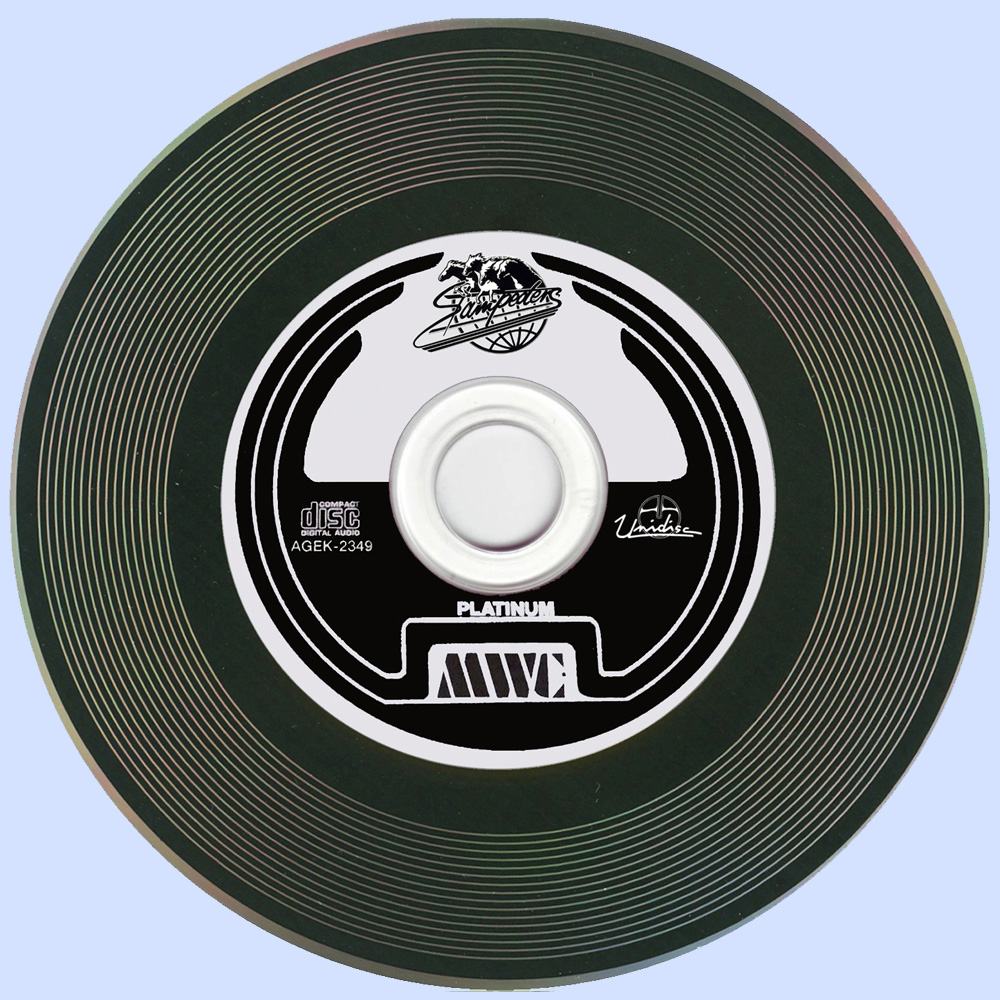
Stampeders - Platinum (1977 canada, groovy funky classic rock, 2001 remaster)


Restless for new challenges and upset with what he considered ‘musical straying’, not ‘evolution’, Dodson quit the band during recording the next album, starting up his own recording studio as well as Marigold Records. To fully incorporate their ever-broadening sound, Berly and King continued on with a swelled personnel, including percussionist Gibby Lacasse (later of The Lydia Taylor Band), Ian Kojima (formerly of Great White Cane with Rick James) & David Norris-Elye on horns and guitarists Doug Macaskill – later of Moxy – & Gary Scrutton, basically the same supporting cast for Hit The Road.

After a series of abbreviated tours they came from the studios in mid ’77 sans the denim and rhinestones – now in the always-fashionable bell-bottoms and satin & lace shirts. The first single from PLATINUM was the lead-off “Bring The House Down” – a pumped-up rhythm & blues number. Also included was the tender “Pictures Of Love”, the eclectic “Sassy Dance” and “Fool’s Lament”.
Tracks
1. Bring The House Down - 4:02
2. Move On Up - 3:52
3. Night And The City (Rich Dodson) - 5:24
4. Sassy Dance (Kim Berly) - 3:27
5. Don't You (Want Like I Do) (Gary Scrutton, Kim Berly) - 4:25
6. Believe It - 4:48
7. Everybody (Kim Berly) - 3:54
8. Picture Of Love - 5:20
9. Fool's Lament (Kim Berly) - 5:25
All songs by Ronnie King except where noted

Stampeders
*Ron King – Rhythm, Electric Guitar, Lead Vocals
*Kim Berly - Lead Vocals, Drums, Percussion
*Gibby Lacasse - Drums, Percussion
*Doug Macaskill - Lead Guitar, 
*Ian Kojima - Tenor, Baritone Sax
*David Norris Elye - Tenor Sax
*Gary Scrutton – Electric, Rhythm Guitar
With
*Rich Dodson - Bass
*Cathy Young - Vocals
*Rob Waterfield - Trumpet

1971  Stampeders - Against the Grain (2006 bonus tracks)  

Monday, December 18, 2023

Bacchus - Celebration (1969-75 us, power hard boogie psych rock, 2023 release)


“Celebration” from the creative and professional band Bacchus, it's an amazing album. It’s without a doubt one of the greatest albums discovered lately. Featuring a total of 8 tracks. This project is different, the vocals here are powerful, memorable, and will get stuck in your head in no time. The instrumentals are enjoyable and the lyrics are original, well-written, and mesh perfectly with the vocal melodies. 

The atmosphere of this project is unique and you may find yourself singing the choruses out loud by the next morning. The production is professional and the energy behind this album is incredible. This band delivers an amazing style of music, reflective of their creative sound and diverse art form. Their skills are impressive and their music is powerful and deserves more attention.

There’s a little bit of everything on this album and It’s certainly refreshing to hear a band with an activist aim to their music, especially within a genre like Rock. 
Tracks
1. Carry My Load (Bill Peterson, Eric Turner, Charlie Souza) - 3:29
2. Good Time (Bill Peterson, Eric Turner, Charlie Souza) - 2:49
3. The Coo (Wayne Cochran, Ray Stevens, Chick Thompson) - 2:31
4. Ya Ya Ya (Eric Turner) - 2:48
5. Hope (Eric Turner, Charlie Souza) - 2:52
6. We Like To Boogie  (Eric Turner) - 2:26
7. A World Behind Time (Charles Harris) - 2:17
8. Celebration (Bill Peterson, Eric Turner, Charlie Souza) - 3:04

Bacchus
*Eric Turner - Lead Vocals, Lead Guitar, Keyboards, Harmonica 
*Charlie Souza - Bass Guitar, Vocals, Piano
*Bill Peterson- Drums

Related Act