Thursday, July 4, 2013

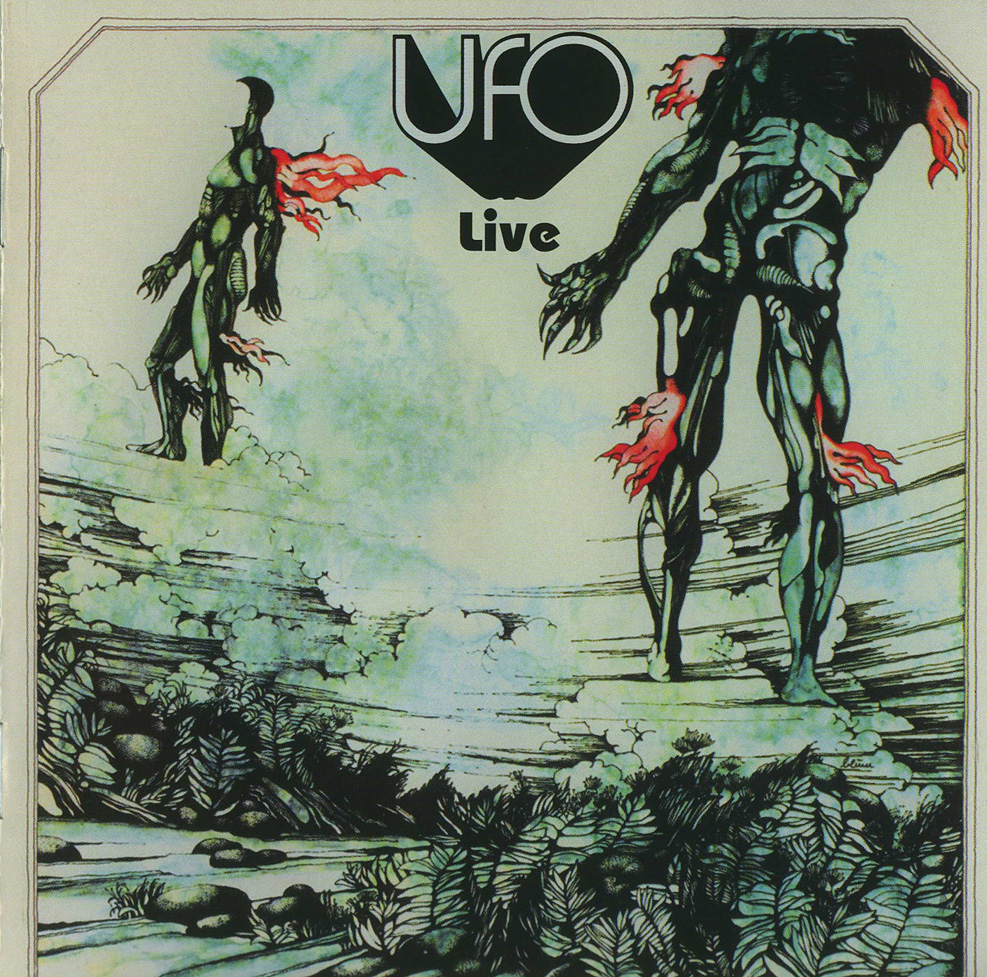
UFO - Live (1972 uk, excellent hard bluesy rock, 2008 Repertoire edition)


 One of the most entertaining hard rock groups of all time, UFO quickly became a popular touring band throughout the world. This rare live recording features six scintillating performances by the group blasting on all cylinders. Kicking off with a spirited version of Eddie Cochran’s ‘C’mon Everybody’ followed by Bo Diddley’s ‘Who Do You Love’, the openers typify the heavy rock band’s R'n'B roots.

With charismatic vocalist Phil Mogg at the helm, this album documents a classic rock band at its best. “Live’ was recorded back in the days when we didn’t have any roadies and had to carry their own gear to every gig.”

Live (later re-issued as UFO Lands In Tokyo), was originally only released in Japan in 1972, soon after Mick Bolton left the group, and UFO set out to find a guitarist who could provide the band with a more standard rock sound.
Repertoire-recs

Tracks
1. C'mon Everybody (Jerry Capehart, Eddie Cochran) - 4:10
2. Who Do You Love (Ellis McDaniel) - 9:00
3. Loving Cup (Paul Butterfield) - 5:10
4. Prince Kajuku/The Coming Of Prince Kajuku (M. Bolton, P. Mogg, A. Parker, P. Way) - 8:20
5. Boogie For George (Bolton, Mogg, Parker, Way) - 11:30
6. Follow You Home (Way) - 6:00
7. Loving Cup (Single Edit) (P. Butterfield) - 3:58

UFO
*Phil Mogg - Vocals
*Mick Bolton - Lead Guitar
*Pete Way - Bass
*Andy Parker - Drums

1970  UFO 1 (2008 Repertoire remaster)

Free Text
Text Host

Wednesday, July 3, 2013

UFO - UFO 1 (1970 uk, great blues acid psych space rock amalgam, 2008 Repertoire remaster)


There have been in the history of rock music bands, which, like a UFO and Scorpions,international career took off with racial progressive album, and after his "birth" music coalition will decide to move to a different area of ​​styling. Sometimes, listening to metal or hard rock albums of these groups completely forget about their progressive origins. Their titled first album debuted in 1970 and was a typical example of blues and boogie based hard rock.

UFO is a British group, which does not need to specifical recommend - for any lover of hard rock classics. The team has been working since 1969 and making music, which is a brilliant combination of classic hard rock sounds of the NWOBHM influences, thus creating an exciting new quality. That UFO remained an unattainable model for the whole spectrum of heavy metal bands active in the 80s. The inspiration achievements UFO openly to such artists such as Steve Harris of Iron Maiden, Kirk Hammett of Metallica and Dave Mustaine of Megadeth.

But let's start from the beginning, that is, the creation of formation and its artistic assumptions. The period of, in which there was to assumptions formation dates back to years in 1969, and her Initial name was the Hocus Pocus. After several months of a change of honoring in this way one of the London clubs with the logo of a UFO, where they were spotted by Noel Moore, who signed them to his Beacon Records label. Debut of "UFO 1" album included a heavy version of Eddie Cochran's classic, "C'mon Everybody" was maintained in hard rock style, full of energy and guitar poweru. Did not cause the expected resonance in the UK and the USA, the most wanted musicians, but the band turned out unexpectedly rock fans in Japan (especially the single "C'mon Everybody" which became a huge hit there) and Germany (the song "Boogie For George", also from the first album, reached #30 in German singles charts

With UFO 1, the band's sound incorporates a lot of the psychedelia of the 1960's and combines with a glimpse of the hard rock that will come. The albums opening track is pure space rock. Had this song been on any Hawkwind album, it would have fit right in. However, with "Boogie" and "Timothy" there is a glimpse of the hard rock that is to come. "Who Do You Love" is a seven and a half minute trip down psychedelic days gone by. (Probably best left that way!)

Pete Way's bass is prominent throughout this CD, bouncing along with a hippie, trippie, vibe. His bass is sometimes the glue that even binds these songs together with Mick Bolton often dropping out of the song all together or going off into somewhat accomplished 60's-style guitar solos. Phil Mogg sounds the same as he always has on this early platter. His smooth distinctive voices is one of the few clues that this is even a UFO record. Much like Hawkwind, UFO's early material had a sort of sci-fi image to it. Give it a listen, and turn on, tune in , and drop back to a time when the winds of change were a coming.
by Adamus67
Tracks
1. Unidentified Flying Object (Pete Way, Phil Mogg, Andy Parker, Mick Bolton) – 2:19
2. Boogie (Way, Mogg, Parker, Bolton) – 4:16
3. C'mon Everybody (Eddie Cochran, Jerry Capehart) – 3:12
4. Shake It About (Way, Mogg, Parker, Bolton) – 3:47
5. (Come Away) Melinda (Fred Hellerman, Fran Minkoff) – 5:04
6. Timothy (Way, Mogg, Parker, Bolton) – 3:28
7. Follow You Home (Way) – 2:13
8. Treacle People (Bolton) – 3:23
9. Who Do You Love? (Ellas McDaniel) – 7:49
10.Evil (Way) – 3:27

UFO
*Phil Mogg - Vocals
*Mick Bolton - Guitar
*Pete Way - Bass
*Andy Parker - Drums

Free Text
Text Host

Tuesday, July 2, 2013

Dark - Teenage Angst The Early Sessions (1969-71 uk, raw fuzzed psych)


Dark are a bygone band from a bygone but very beloved era. Their psych-rock is represented here by eleven songs—by two different lineups—that predate their 1972 album Teenage Angst. The only common element is guitarist-vocalist Steve Giles. The first five tracks were recorded in 1971 by the trio of Giles, bassist Carl Bush, and drummer C. Thornycroft.
 
The last six tracks are from 1969, and probably sequenced this way due to the shabby quality of those recordings. The ’69 cuts were recorded by Giles and a different backup unit: organist Martin Moloney, bassist Bruce Duncan, and drummer Charlie Hiams.
 
 “In The Sky,” “Wasting Your Time,” and “Could Have Sworn” are built upon loose “jammy” structures, fuzz-drenched guitar, and leaden basslines—a very familiar formula. “Maypole” kicks things up a notch with a melodic bass lead, plodding cadence and a cool wah~fuzz guitar solo.
 
The next pair of tunes (from 1969) rooted by Martin Moloney’s velvety organ tone. An earlier, version of the first half’s best song, “Maypole,” appears here with a slacker, undermixed guitar solo, and an obnoxious fadeout at the middle, akin to experiencing a space-time warp. Bowl haircuts whip themselves into a collective frenzy with the unproduced acid rock jam, “Bad Taste,” (also anointed with a theremin-charged ending).
 
“Grey Man” and “Cloud Of Unknowing” round out the set, and are barely listenable due to the lowest of production values, complete with dropouts, incomprehensible vocals, teetering signal limits, and all that nonsense. This kind of rawness is testament makes Dark an interesting piece of nostalgia.
by Elias Granillo
Tracks
1. In The Sky - 04:22
2. Wasting Your Time - 05:03
3. Could Have Sworn - 04:57
4. Maypole - 05:54
5. R.C.8. - 03:58
6. All Through The Night - 03:11
7. I'm Not Sad - 06:46
8. Maypole - 04:46
9. Bad Taste - 05:29
10.Grey Man - 05:13
11.Cloud Of Unknowing - 15:20
Songs 1-5 written by Steve Giles, Carl Bush, Clive Thorneycroft
Songs 6-11 written by Steve Giles, Bruce Duncan, Charles Hiams, Nartin Moloney

Dark
*Steve Giles - Guitar
*Carl Bush - Bass (Ttacks 1-5)
*Clive Thorneycroft - Drums (Ttacks 1-5)
*Bruce Duncan - Bass (Ttacks 6-11)
*Charles Hiams - Drums (Ttacks 6-11)
*Nartin Moloney - Organ, Vocals (Ttacks 6-11)

Monday, July 1, 2013

Rory Gallagher - Against The Grain (1975 ireland, remarkable blues rock, 2018 bonus tracks remaster)


 Rory's seventh album catches him in sparking form. He had released the hugely successful 'Irish Tour' album a year earlier, recorded with the great Albert King at the Montreuxm Music Festival and had just negotiated a new deal with Chrysalis Records. Rory was now established as a major solo artist and was producing some of the best live and studio performances of his career. 'Against The Grain' perfectly captures the enthusiasm and emotion of the time.
 
"All Around Man" was written by Bo Carter, one of the original members of the Mississippi Sheiks, a band Rory greatly admired and pays tribute to on 'Photo Finish'. This inspired cover version features a great Lou Martin solo.
 
"Watching the sky with tears in my eyes, I feel lonely
Time's flying by, but I start to smile, it's not easy"
The demise of Taste is described in "At The Bottom". It had been nearly five years since the split, but it is clear in the lyrics that Rory was only just coming to terms with that time in his life.
Last Of Independents
Tracks
1. Let Me In  - 4:03
2. Cross Me Off Your List  - 4:26
3. Ain't Too Good  - 3:54
4. Souped-Up Ford  - 6:24
5. Bought and Sold  - 3:24
6. I Take What I Want (David Porter, Mabon "Teenie" Hodges, Isaac Hayes) - 4:22
7. Lost at Sea  - 4:06
8. All Around Man (Bo Carter) - 6:14
9. Out on the Western Plain (Huddie Ledbetter) - 3:53
10.At the Bottom  - 3:18
11.Cluney Blues - 2:12
12.My Baby, Sure - 2:55
All tracks composed by Rory Gallagher; except where stated
Bonus tracks 11-12

Musicians
*Rory Gallagher - Guitars, Vocals
*Gerry McAvoy - Bass
*Lou Martin - Keyboards
*Rod de'Ath - Drums, Percussion

1973  Tattoo (2012 promo copy, high audio quality)

Sunday, June 30, 2013

Caravan - If I Could Do It All Over Again, I'd Do It All Over You (1970 uk, brilliant canterbury progressive jazz rock, SHM remaster with bonus tracks)


 'If I Could Do It All Over Again, I'd Do It All Over You' was Caravan's second album. Their self-titled first LP, for Verve (home of Bird, Ella and the Velvets, natch) had held some promise, but was underproduced and underpowered: some great songs ('Place Of My Own', 'Love Song With Flute') and a lot of filler*.

A move to Decca two years later brought a much more assured and distinctive sound, however. Indeed, this record perfectly bridges that awkward gap between psych and prog, being every bit as much of a muso-fest as their more illustrious (and dull) Melody Maker poll winning rivals could boast, but - and it's a big but - full of good, old fashioned, acid-fuelled SONGS WITH TUNES. And what tunes. I wanna elect Pye Hastings as the great lost English songsmith of our time. But I digress.

The title track starts proceedings. And a catchier little ditty is impossible to find. One of those songs where one hearing alone lodges itself into your brain for life. I bet there are people out there who may have heard that 'Who - do - you - think you are - do - you - think you are' refrain on Top Gear or similar back in 1970, have never heard it since, and could sing it from memory even now.

It's got a well-weird time signature a la the grossest excesses of Messrs Emerson and Greenslade (and a keyboard solo likewise) but, like the best Canterbury tunes, you can't fail to move to it. In an ideal world this would have knocked Mungo Jerry and the sodding Archies into the remainder bins straight away, and would be a perennial feelgood oldie 45. It was a single, by the way. It sold, by my conservative estimate, two copies.

Then things move up...nah, they rocket ten miles high. 'And I Wish I Were Stoned' is a cracking example of the aforementioned songwriting genius. On first impressions, a simple, repeating upward verse (sung in the rustic tenor of Richard Sinclair) with a corresponding decending chorus (sung in the charmingly strained alto of the mighty Pye), it follows the first song in avoiding 4/4 altogether, not so's you'd notice though. Okay, this one might take TWO hearings this time, but then I'd defy you to not be singing it the next morning.

The only thing that might stop you is the fact that the segued 'Don't Worry' that follows is THE MOST WONDERFUL TUNE EVER WRITTEN IN THE HISTORY OF MANKIND. Well, since Schubert's Rosamunde Overture anyway. There is no justice in this world that this perfect song hasn't been covered a hundred times since and earned its composers a fortune. Just hear it, please. The two tracks together constitute the best eight minutes of psych-tinged rock that my stylus has ever ploughed.

After such an early peak, things have to go downhill, but not far. A phased, stereo-panned drum sequence leads into the deadly slow 'As I Feel I Die' where "everything's going a slight shade of purple" and the downers take hold. Not for long though. Another fatally catchy (and blatantly jazz-based) riff forms the basis of the remainder of the song, and, as on every track before and after, Dave Sinclair takes over with an organ solo that tells Ray Manzarek the news.

And the side ends with the 'With An Ear To The Ground You Can Make It' sequence, another blisteringly tuneful epic with the best keyboard sequence of the whole album three minutes in. The slower, flute-accompanied reprise of the main tune is pure delight, before the piece ends with what sounds like Rick Wright falling asleep at Keith Jarrett's Koln Concert.

Side Two starts with two short, nice-but-inessential tracks in 'Hello Hello' and 'Asforteri', the former being the better of the two and Richard Sinclair's only real vocal spotlight on the album (he was to have a much greater showcase on the excellent 'In The Land Of Grey And Pink' album twelve months later). But his name is immortalised on the longest and most famous (in Caravan and Canterbury terms, you understand) track on the record that comes next. 'For Richard' starts slowly, quietly, and menacingly, not a million miles away from the Floyd's 'Careful With That Axe, Eugene' epic on 'Ummagumma', but with another otherwise tender, melodic vocal with flute obligato.

Then, like 'Eugene', the intensity slowly increases, until, 3'40" in, comes...THE RIFF. And here, more than at any point on the record, Caravan rocks. The track palls a little as the solos progress (and god, do they progress) but comes to life again in the guitar-driven coda that emerges after ten minutes or so. The album ends with the pointless half-song that is 'Limits'. Never mind.

The 14 minutes that comprise 'For Richard' have become the staple of every Caravan live set to this day, but that track is a muso-fest only as far as I'm concerned. The real meat and two veg of Caravan's second album is the almost faultless sequence of SONGS that comprise Side One, essential listening for anyone with an interest in the latter days of sixties drugrock.
by Fitter Stoke
Tracks
1. If I Could Do It All Over Again, I'd Do It All Over You - 3:07
2. And I Wish I Were Stoned - Don't Worry - 8:21
3. As I Feel I Die - 5:17
4. With An Ear To The Ground You Can Make It / Martinian / Only Cox / Reprise - 9:56
5. Hello Hello - 3:46
6. Asforteri 25 - 1:21
7. Can't Be Long Now / Francoise / For Richard / Warlock - 14:18
8. Limits - 1:34
9. A Day In The Life Of Maurice Haylett - 5:40
10.Why? - And I Wish I Were Stoned - 4:22
11.Clipping The 8th - Hello Hello - 3:13
12.As I Feel I Die - 4:39
All songs by Richard Coughlan, Pye Hastings, Richard Sinclair and Dave Sinclair.

Caravan
*Richard Coughlan - Drums, Congas, Bongos, Maracas, Finger Cymbals
*Pye Hastings - Vocals, Guitars, Claves
*David Sinclair - Keyboards
*Richard Sinclair - Vocals, Bass, Tambourine
Guest
*Brother James - Sax, Flute

1968  Caravan (japan SHM-CD remaster)

Free Text
Text Host
Saturday, June 29, 2013

Child - Child (1968 us, stunning heavy psych, 2001 edition)


 Short lived band released this one and only album in the late sixties. The sound is close to Vanilla Fudge heavy psych with floods of organ tight rhythm section and dramatically vocals.
Tracks
1 Hold On I'm Coming (David Porter, Isaac Hayes) - 5:05
2 Little Light (Mike Lewis) - 3:52
3 Aunt Millie (The Child) - 3:15
4 You'll Never Walk Alone (Richard Rodgers, Oscar Hammerstein) - 3:15
5 Soft Rocks (The Child) - 4:05
6 Exodus (Ernest Gold, Pat Boone) - 4:30
7 A Child Begins to Cry (The Child) - 3:37
8 Ol' Man River (O. Hammerstein, Jerome Kern) - 6:34

Child
*Teddy Graybill - Lead Vocals
*Paul Alagna - Lead Vocals, Guitar, Harmonica
*Frances "Chick" Rizzo - Bass
*Thomas "Tommy" Cruz - Drums, Percussion
*Joseph "Joey" Merone - Organ, Piano, Chimes

Friday, June 28, 2013

Love - Love (1966 us, amazing garage acid psych folk rock, remaster and expanded)


 One of the best West Coast folk-rock/psychedelic bands, Love may have also been the first widely acclaimed cult/underground group. During their brief heyday -- lasting all of three albums -- they drew from Byrds-ish folk-rock, Stones-ish hard rock, blues, jazz, flamenco, and even light orchestral pop to create a heady stew of their own.

They were also one of the first integrated rock groups, led by genius singer/songwriter Arthur Lee, one of the most idiosyncratic and enigmatic talents of the '60s. Stars in their native Los Angeles and an early inspiration to the Doors, they perversely refused to tour until well past their peak. This ensured their failure to land a hit single or album, though in truth the band's vision may have been too elusive to attract mass success anyway.

Love was formed by Lee in the mid-'60s in Los Angeles. Although only 20 at the time, Lee had already scuffled around the fringes of the rock and soul business for a couple of years. In addition to recording some flop singles with his own bands, he wrote and produced a single for Rosa Lee Brooks that Jimi Hendrix played on as session guitarist. Originally calling his outfit the Grass Roots, Lee changed the name to Love after another Los Angeles group called the Grass Roots began recording for Dunhill. Love's repertoire would be largely penned by Lee, with a few contributions by guitarist Bryan MacLean.

Inspired by British Invasion bands and local peers the Byrds, Love built up a strong following in hip L.A. clubs. Soon they were signed by Elektra, the noted folk label that was just starting to get its feet wet in rock (it had recorded material by early versions of the Byrds and the Lovin' Spoonful, and had just released the first LP by Paul Butterfield). Their self-titled debut album (1966) introduced their marriage of the Byrds and the Stones on a set of mostly original material and contained a small hit, their punk-ish adaptation of Bacharach/David's "My Little Red Book."
by Richie Unterberger
Tracks
1. My Little Red Book (Burt Bacharach, Hal David) - 2:41
2. Can't Explain (Arthur Lee, John Echols, John Fleckenstein) - 3:15
3. A Message To Pretty - 2:09
4. My Flash On You - 2:53
5. Softly To Me (Bryan MacLean) - 2:47
6. No Matter What You Do - 2:07
7. Emotions (Arthur Lee, John Echols) - 2:27
8. You I'll Be Following - 2:43
9. Gazing - 2:43
10.Hey Joe (Billy Roberts) - 2:49
11.Signed D.C. - 2:00
12.Colored Balls Falling - 2:41
13.Mushroom Clouds (Arthur Lee, John Echols, Ken Forssi, Bryan MacLean) - 3:04
14.And More (Arthur Lee, Bryan MacLean) - 2:33
15.My Little Red Book (Burt Bacharach, Hal David) - 2:41
16.Can't Explain (Arthur Lee, John Echols, John Fleckenstein) - 3:14
17.A Message To Pretty - 2:10
18.My Flash On You - 2:58 
19.Softly On Me (Bryan MacLean) - 2:47
20.No Matter What You Do - 2:02
21.Emotions (Arthur Lee, John Echols) - 2:26
22.You'll Be Following - 2:26
23.Gazing - 2:42 
24.Hey Joe (Billy Roberts) - 2:42
25.Signed D.C. - 2:47
26.Colored Balls Falling - 1:56
27.Mushroom Clouds (Arthur Lee, John Echols, Ken Forssi, Bryan MacLean) - 2:26
28.And More (Arthur Lee, Bryan MacLean) - 3:05 
29.Number 14 - 1:47 
30.Signed D.C. - 2:50
All songs by Artur Lee unless as else written.
Tracks 1-14 Mono Mix
Tracks 15-28 Stereo Mix
Bonus Tracks 29-30

Love
*Arthur Lee - Guitar, Vocals, Producer
*John Echols - Guitar
*Ken Forssi - Bass
*Bryan MacLean - Guitar, Vocals
*Alban Pfisterer - Drums

related Act
1966-82  Bryan MacLean - Ifyoubelievein

Just Paste
Free Text
Text Host

Monday, June 24, 2013

Ashra - Blackouts (1978 germany, inspiring progressive experimental space rock)


 Right from the beginning of Track One 77 Slightly Delayed you just know that this is going to be something special, Manuel wastes no time in setting up a great syncopated backing. Then the guitar comes in - and what guitar! Clean, precise and wonderfully effected. OK, yes I am a fan and have been for over twenty years. So its a joy to pull this album from the shelves in order to write this review.
 
Manuel manages to mesh his rhythm and lead playing so well, the rhythm being one of those classic and perfect sounds. This isn't one of those guitar improv work-outs, the listener is left in no doubt that Manuel meant to play every note he played.
 
Track Two Midnight On Mars, ah - my favourite ASHRA track EVER. It's "Midnight on Mars" and I'm there right alongside him. Again Manuel sets up the lead line perfectly with his mix of synths, drum machine (wasn't it the classic EKO Rhythm Computer?) and wicked guitar. This particular melody has lived in my brain since the first moment I heard it, twenty plus years ago. In fact, everyone.  I've ever played this track to has commented on it. Manuel should be praised for creating one of the most sublime guitar moments ever to be recorded. I think I'm gushing here. Still what the hell, this track is worth it.
 
Track Three Don’t Trust The Kids isn't letting up, a bass sequence brings in the piece. This is soon joined by subtle percussion and a very well-crafted rhythm guitar. Manuel certainly gets an amazing rhythmic feel. The lead line isn't far behind, this time two guitars playing in harmony. I've never been really sure whether or not that's a guitar synth. It's the right time for the early Roland GR500 and I believe Edgar Froese was using one at about this time as well.
 
The lead is given over to a nicely distorting guitar, again Manuel really means every note he's playing. A superb bit of programming moves the whole piece into double-time, and Track Four Blackouts. He isn't even breaking into a sweat, this is fantastic guitar.
 
Track Five Shuttle Cock again shows off the rhythm playing and what a groove he sets up. The piece just lopes along with some great interplay between the guitars and the sequencers.
 
Track Six Lotus Part I-IV continues the lesson in setting up a groove, Manuel actually gets a bit discordant here for a while before pulling it all back for the typical ASHRA sound, namely babbling sequencers, the minimum of percussion and smartly effected arpeggios. This track shows his ability to generate a flowing piece of music that takes the listener with it, wherever the end of the journey may be.
 
The Bottom Line: Buy it, buy it, buy it. Couldn't be clearer really, could it? Beware there is a subliminal message hidden in that last sentence.
 
The wording on the old LP sums it up quite nicely really, "Manuel Göttsching plays Sequencer, Keyboards and a lot of Guitar". He sure does.
by Andy Bloyce
Tracks
1. 77 Slightly Delayed - 6:40
2. Midnight On Mars - 6:51
3. Don't Trust The Kids - 3:16
4. Blackouts - 4:38
5. Shuttle Cock - 8:27
6. Lotus-Part I - IV - 17:05
All compositions by Manuel Göttsching.

*Manuel Göttsching - Guitar, Keyboards, Sequencer

Free Text

Sunday, June 23, 2013

Victoria - Victoria (1971 us, great west coast psych, 2005 reissue)


 Though initially recorded in the late '60s and early '70s, the tracks that make up Victoria's sole release didn't see wide release until nearly 30 years later, seeing a further re-release on Shadoks in 2005.
 
Consisting of a small limited-edition album and a variety of further cuts from tape and acetate, Victoria's appeal lies perhaps most in the sextet's ability to get a lot out of limited resources.
Opening cut "Peace" is almost surprisingly lush and detailed, triumphant brass parts mixing in with the exultant rock & roll from the band.
 
From there the 15 songs on the CD wend their way, ranging from gentle contemplation to fuller-bodied affairs, less fried psychedelia than the kind of widescreen pop that coexisted with it.
 
The exact lineup of the band is unclear -- only four people are credited, not all of whom appear to have performed at the same time -- but one Greg Ruban was the core songwriter and arranger, and it's his ability to capture his band surprisingly well that ensures Victoria is more than simply a rare curio.
 
In ways he simply reflects his time -- "Gevaro" sounds like a lost cut by contemporary Santana, while the proto-prog of "Village of Etaf (Prelude and Overture)" goes on a touch too long in the end.
 
Throughout, singers Maureen Deidelbaum, Cherryl Simpson, and Sharon Barton -- or some combination of them -- acquit themselves well enough. One of their best efforts is one of the quietly wittiest -- "Never Knew Blues," the title of which is both somewhat descriptive (the descending blues influence is mostly heard in the verses) and an apt section of lyric.
 
Intriguingly, some of the best tunes never made the original LP release -- "Mister Let Me Go" is a lovely piano-led country song a la the Band, while the autoharp-led "Wheels" feels almost like a cousin to the third Velvet Underground album thanks to the murky rhythm section and steady rumbling pace
by Ned Raggett
Tracks
1. Peace - 2:44
2. Cumberland - 4:41
3. Gevaro - 4:11
4. Ride a Rainbow - 2:50
5. Never Knew Blues - 4:58
6. Down to the Park (Earth Day Park) - 2:57
7. Village of Etaf (Prelude and Overture) - 12:23
8. Core of the Apple - 8:09
9. Mister Let Me Go - 3:37
10.Johny and Lisa - 3:02
11.Peace - 2:52
12.Cumberland - 2:51
13.Child of Princess - 3:07
14.Sundance - 1:46
15.Wheels - 2:02

Victoria
*Greg Ruban
*Maureen Deidelbaum
*Cherryl Simpson
*Sharon Barton

Free Text

Saturday, June 22, 2013

Focus - Focus III (1972 holland, extraordinary experimental prog rock with folk shades, japan mini lp release)


 Riding on the success of their hit single "Hocus Pocus" from the revolutionary Moving Waves album, Focus got to work on this, their third LP in four years. While the debut album featured a style not too dissimilar to the Bonzo Dog Doo Dah Band, Focus' second LP, Moving Waves, was purely instrumental and wholly serious-minded.

Focus III kept this same sound, but approached it with a jollier, more accessible tone. As with its predecessor, Focus III featured only one tune that would have a chance of being a hit single. The enjoyable rhythm of "Sylvia," partnered with Jan Akkerman's victorious guitar solo, some of Van Leer's finest organ work, Bert Ruiter's tight basslines, and Pierre Van Der Linden's mellow drumming, assured the track classic status. "Sylvia" found worldwide success and gained the band valuable radio and press exposure.

The song remains one of the most loved and best remembered songs from Focus' catalog. The consistency in musical quality throughout Focus III is enough to merit any listeners' respect. To be frank, this LP has it all: diverse songs, astounding musicianship, one of the finest singles ever released -- Focus III should unquestionably be ranked alongside the likes of Revolver, Dark Side of the Moon, and any others of rock's greatest.
by Ben Davies
Tracks
1. Round Goes The Gossip..(Virgil AENEIDOS LIBER IV) (Thijs Van Leer)  - 5:16
2. Love Remembered (Jan Akkerman) - 2:49
3. Sylvia (Van Leer) - 3:32
4. Carnival Fugue (Van Leer) - 6:02
5. Focus III (Van Leer) - 6:07
6. Answers? Questions! Questions? Answers! (Akkerman, Bert Ruiter) - 14:03
7. Anonymus II (Part 1) (Van Leer, Akkerman, Ruiter, Pierre Van Der Linden) - 19:28
8. Anonymus II (Conclusion) (Van Leer, Akkerman, Ruiter, Van Der Linden) - 7:30
9. Elspeth Of Nottingham (Akkerman) - 3:15
10.House Of The King (Akkerman) - 2:23

Focus
*Thijs Van Leer – Vocals, Piano, Organ, Alto Flute Piccolo, Harpsichord
*Jan Akkerman – Electric, Acoustic Guitar
*Bert Ruiter – Bass Guitar
*Pierre Van Der Linden – Drums

Free Text
the Free Text